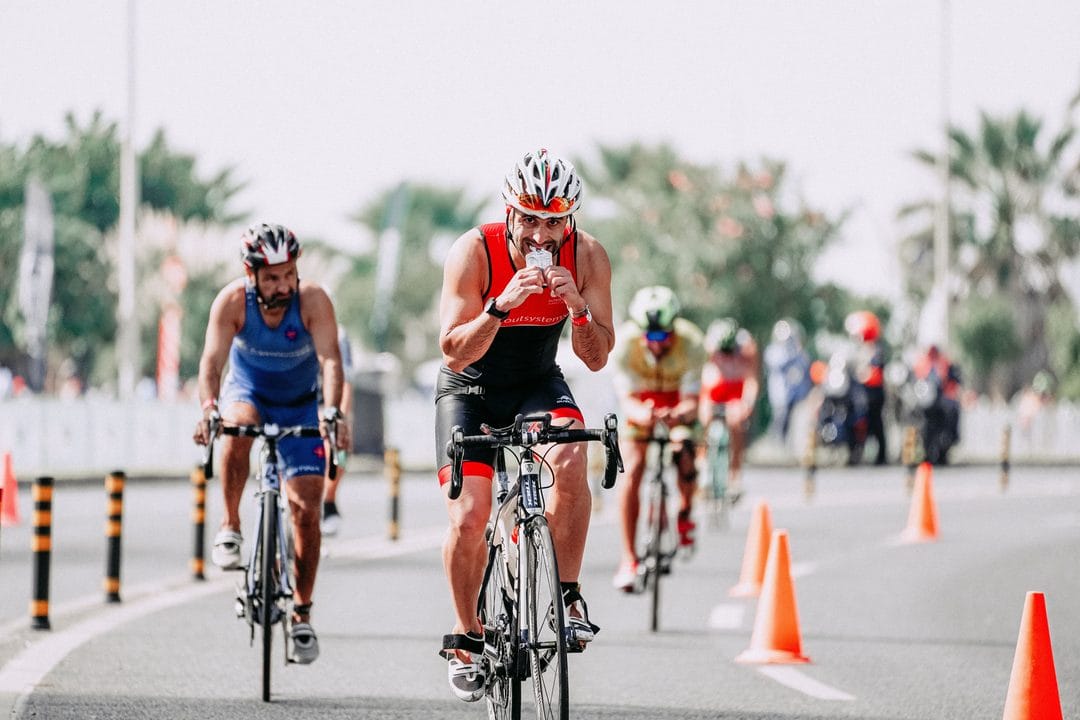
Somewhere around kilometer 90 of a hard century ride, most amateur racers make the same mistake: they reach for water because they're thirsty, not because a plan told them to. By then the damage from a slow, uneven fluid deficit is already baked into the legs, and no amount of catching up in the final 20K fixes it. The gap between finishing strong and cracking on the last climb is rarely fitness — it's a hydration and caffeine protocol that was decided the night before, not improvised on the bike. Elite endurance athletes don't treat race-day fluids as an afterthought bolted onto training, and you shouldn't either if you've put in the winter miles to actually be competitive. They treat sodium, water, and caffeine timing as three separate levers that have to be pulled at different moments, and getting the sequence wrong costs more time than most people's entire warm-up routine saves. You've probably seen a strong rider blow up in the last 20K of a race you also finished, and it likely wasn't a fitness gap — it was a fluid and fueling plan that fell apart under heat and effort. Here's the protocol, broken down the way a sports physiologist would actually explain it to a rider the week of a race, not the generic "stay hydrated" advice that shows up on every running blog. None of it is complicated once you know your own numbers; the hard part is bothering to find them before race week instead of during it.
Why Thirst Is a Lagging Indicator, Not a Warning Light
By the time you feel thirsty, you're already running a fluid deficit of roughly 1-2% of body weight — enough to measurably slow you down before your brain even registers the problem. Thirst is a delayed signal, not a real-time gauge, which is exactly why pro cycling teams weigh riders before and after training rides to calculate individual sweat rates rather than trusting how thirsty anyone feels mid-effort. A 75-kilogram rider who loses 1.5 kilograms over a 90-minute ride in 28°C heat is sweating out roughly a liter an hour, and that number — not a generic "drink 500ml per hour" rule — is what should set the race-day plan. Two riders on the same start line, same power output, same kit, can have sweat rates that differ by a factor of two, which is exactly why generic advice fails so many people. One of them needs 1.2 liters an hour to stay ahead of the deficit; the other is fine on 600ml and would spend the whole race feeling bloated trying to match the first rider's intake. Neither number is right or wrong — they're just different riders, and racing off someone else's hydration plan is as pointless as racing off their power file.
Building Your Personal Sweat-Rate Number
Weigh yourself naked before a one-hour training ride at race intensity in similar heat to what you'll race in. Don't drink anything during that hour. Weigh yourself again immediately after, in the same state. Every kilogram lost equals roughly a liter of sweat, and that liter-per-hour figure becomes your baseline fluid target — not a target you hit exactly, since full replacement during hard efforts can cause its own problems, but a number you now have instead of a guess.
Aim to replace 60-80% of that sweat-rate figure during the race itself, not 100%. Full replacement sounds like the safer choice, but pushing that much fluid through your gut during a hard effort routes blood away from working muscles and toward digestion, which is its own performance cost. A rider who loses 1 liter an hour and drinks 700ml an hour finishes better than one who forces down the full liter and spends the last hour fighting gut discomfort instead of racing.
Sodium: The Number Most Amateurs Skip Entirely
Most amateur racers know their FTP down to the watt and have never once measured their sweat rate.
Sweat isn't just water — it's water carrying sodium out of your system, and sodium loss rates vary enormously between individuals. A "salty sweater" (you'll know if you are one: white crust on your kit and cap after a long ride) can lose 1,500-2,000mg of sodium per liter of sweat, while a low sodium-loser might lose under 500mg. Precision Fuel & Hydration and similar sweat-testing services will give you an exact number for around $150-200; short of that, start with 500-700mg of sodium per liter of fluid during hot races and adjust from there based on cramping history.
Skip the sodium and drink plain water at high volume during a hot, long race, and you risk hyponatremia — a real, occasionally fatal condition where blood sodium drops too low, not just a milder version of dehydration. It shows up as confusion, nausea, and swelling, and it has ended more than one marathoner's race in a medical tent. This is the one part of the protocol that isn't optional in heat.
Caffeine Timing: Two Doses, Not One Big One
The research-backed approach that most amateur racers get backward is dosing all their caffeine at once, right before the start, when the actual performance benefit comes from timing it around when you need it most. A 3mg-per-kilogram-of-bodyweight dose 60 minutes before the start gets caffeine into your system for the opening effort. Save a second, smaller dose — 1-2mg per kilogram, in the form of a gel or chew, not a full cup of coffee — for roughly the two-thirds mark of the race, when perceived effort typically spikes and a second hit measurably blunts it.
Sixty milligrams is roughly one strong cup of coffee or one caffeinated gel; a 70-kilogram rider dosing 3mg/kg for the pre-race hit is looking at about 210mg, which is closer to two cups than one. Don't experiment with a dose or a brand you haven't used in training — race morning is not the time to discover a new gel disagrees with your stomach, and "just try it Sunday" is how good race plans turn into DNFs.
There's a real caveat here worth sitting with: caffeine sensitivity varies wildly, and a dose that sharpens one rider dulls another with jitteriness and a racing heart rate that has nothing to do with effort. If you've never used caffeine in training specifically to test your response, race day with a new protocol is the wrong place to find out. Test the exact dose and timing in at least two hard training sessions first.
Putting the Two Together on Race Morning
Start hydrating the night before, not the morning of — roughly 500ml with a pinch of salt before bed gets you starting the race properly hydrated instead of playing catch-up from mile one. Morning of, another 500ml two hours before the start allows time to clear excess before the gun goes off. Then the plan you built from your own sweat-rate number and sodium tolerance takes over, checked and adjusted, not reinvented, once you're actually racing.
None of this replaces fitness. A well-timed hydration and caffeine protocol will not turn a mid-pack finisher into a podium contender. What it reliably does is close the gap between how you trained and how you actually raced — the difference between the rider who's still making decisions at kilometer 150 and the one who's just surviving it.