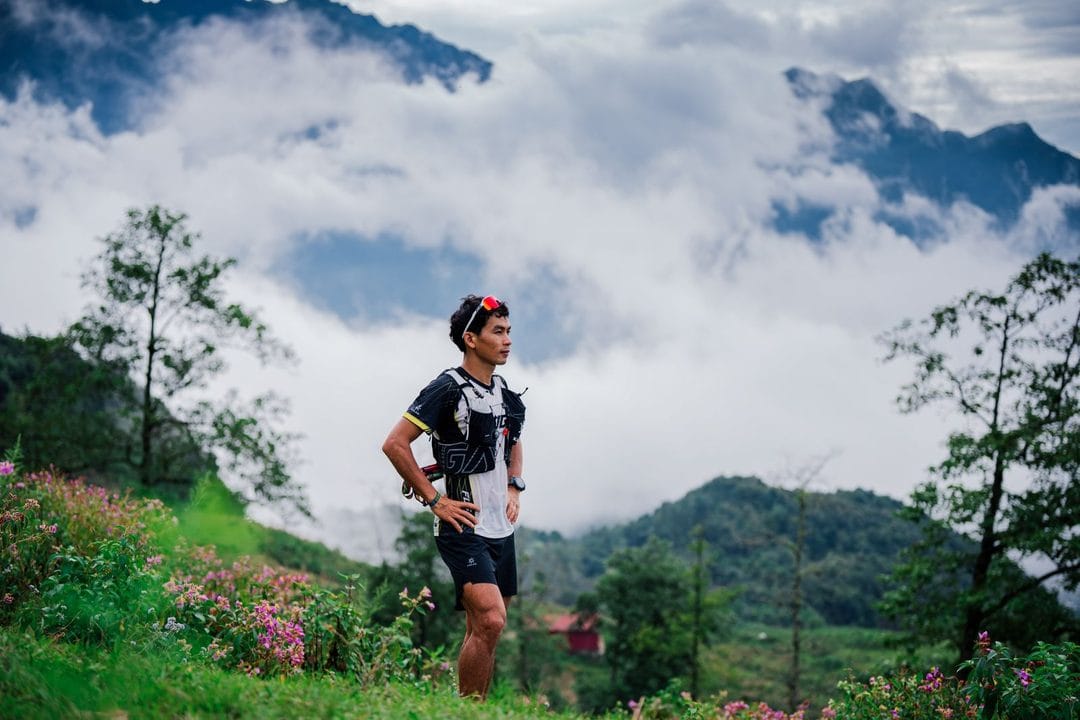
Ask a World Tour cyclist where they spent June and the answer is rarely "at home." It's Tenerife, Sierra Nevada, or a rented apartment above Font-Romeu, 1,850 metres up in the French Pyrenees, sharing a kitchen with three teammates and a soigneur who has done this trip nine times. Meanwhile, a serious club triathlete two categories below them is zipping themselves into a canvas tent in a spare bedroom, breathing air pumped down to a simulated 2,800 metres by a machine that cost about as much as a decent road bike. Both are chasing the same six letters: EPO, the hormone that tells bone marrow to make more red blood cells. Only one of them is getting the full effect, and the gap between the two approaches is wider than the marketing for altitude tents ever admits.
The 2,000-Metre Window Nobody Wants to Compromise On
Altitude works because thinner air carries less oxygen, and the body responds to that stress by producing more erythropoietin within 24 to 48 hours of exposure. Sustained over three to four weeks at the right elevation, that hormonal signal translates into a measurable rise in haemoglobin mass — the sports science literature generally puts the gain at 3 to 5 percent for well-executed camps, enough to matter over a 90-minute effort but not enough to show up as a dramatic before-and-after story. The elevation band matters more than most amateur athletes assume. Below roughly 1,800 metres, the hypoxic stimulus is often too weak to trigger meaningful adaptation; above 2,500 metres, sleep quality degrades, appetite drops, and training intensity suffers because there simply isn't enough oxygen left to hold race pace. That's why Font-Romeu, St. Moritz at 1,800 metres in Switzerland, and Sierra Nevada in Spain at 2,320 metres keep showing up on team calendars year after year — they sit inside the narrow band where the adaptation outweighs the cost to training quality.
Iten and Kaptagat in Kenya, both around 2,400 metres, occupy the same sweet spot, which is not a coincidence. Generations of Kenyan distance runners have trained there not because a sports scientist drew a map, but because the terrain, the training culture, and the elevation happened to align decades before anyone published a paper explaining why it worked. That's the part altitude tents can't replicate: the training itself changes at altitude, not just the air. Running or riding at 2,000 metres forces pace down, which means more volume at a truly aerobic intensity — the exact zone amateur athletes chronically train too hard to hit properly at sea level.
Live High, Train Low: Why the Protocol Won the Argument
For years, altitude camps meant living and training at elevation the whole time, which created an obvious problem: hard intervals at 2,000 metres feel like hard intervals with a plastic bag over your head. Sleep there, train down at 800 metres or lower, and the equation changes completely. The "live high, train low" model — refined through research by physiologist Benjamin Levine in the 1990s and now standard practice across professional endurance sport — keeps the haematological stimulus from sleeping altitude while letting athletes hold sea-level power and pace in sessions. Teams based near Sierra Nevada exploit exactly this: sleep in the town at altitude, drive twenty minutes down into the valley for intervals, then drive back up.
Coaches who still run pure live-high-train-high camps are, in most cases, making a mistake. The data on live-low training quality is too consistent to ignore, and the athletes who complain about "flat legs" during altitude camps are almost always the ones training every session up top. Split the exposure and the complaint mostly disappears. There's a real logistics cost to arranging daily transport between two elevations, and not every training base has a valley close enough to make it practical — Iten's runners, for instance, train almost entirely at altitude because there's no low-elevation option nearby, and they still produce some of the best distance times in history, which is the exception that keeps this whole debate alive rather than settling it.
Hypoxic Tents Promise the Same Adaptation for a Fraction of the Cost
A three-week camp in the Alps or the Pyrenees runs a national federation or a pro team anywhere from £2,500 to £4,500 per athlete before flights, and that's before accounting for the coaching staff, physio support, and lost training-group cohesion back home. A Hypoxico tent system, by contrast, sits at roughly £3,000 to £6,000 as a one-time purchase and then delivers "altitude" every night in a spare bedroom for years. Companies selling these systems point to studies showing haemoglobin mass increases from simulated altitude exposure, and the effect is real — nobody credible disputes that nitrogen-diluted air raises EPO the same way thin mountain air does.
So why do professional teams still spend the equivalent of a small house deposit flying riders to St. Moritz every summer when a tent costs a few thousand pounds and sits in a bedroom?
The honest answer is dose and compliance. Research camps use continuous exposure — 16 or more hours a day for three to four weeks straight, monitored, with iron status checked twice weekly and training load adjusted daily by a physiologist standing next to the athlete. Home tent users average far less: broken sleep inside a hot plastic enclosure, nights skipped because a partner can't sleep next to the compressor noise, and no one checking whether ferritin has dropped below the 30 ng/mL threshold below which the whole adaptation stalls. The tent produces the correct hypoxic stimulus on paper. What it can't produce is the discipline of a monitored camp, and that gap between "theoretically works" and "consistently works for this specific athlete" is where most of the tent's promised benefit quietly leaks away.
The Responder Problem Nobody Puts on the Brochure
Roughly 15 to 20 percent of athletes show little to no haemoglobin mass increase from altitude exposure at all, tent or mountain, and there is no reliable way to predict who falls into that group before sending them. Some coaches now test a short exposure block and check ferritin, reticulocyte count, and haemoglobin mass via CO-rebreathing before committing an athlete to a full camp — expensive testing, but cheaper than flying a non-responder to Switzerland for a month and getting nothing back. Genetics play a role here that nobody fully understands yet, and baseline iron stores matter enormously: an athlete who arrives at altitude with ferritin under 30 ng/mL will struggle to make red blood cells no matter how thin the air is, tent or mountain.
Camps still beat tents for a second reason that rarely makes it into the physiology papers: athletes actually stick to the plan. Removed from home distractions, eating meals a team chef has planned around iron and protein targets, and surrounded by teammates doing the same three-week block, compliance runs close to 100 percent. Left alone with a tent in a spare room, most amateur athletes manage 60 to 70 percent of prescribed hours before giving up on a stuffy night's sleep — and a hypoxic dose delivered inconsistently produces roughly the adaptation you'd expect from inconsistency, which is to say, not much.
Getting the Timing Right for a 2026 Race Calendar
Altitude's biggest tactical trap has nothing to do with elevation and everything to do with the calendar. The adaptation peaks 10 to 14 days after returning to sea level, once plasma volume has re-expanded and the extra red blood cells are circulating in blood that isn't still artificially thickened. Race inside the first week back and athletes often feel flat and heavy-legged — dehydrated blood, essentially — before the benefit fully arrives. Wait past day 20 to 25 and much of the haemoglobin gain has already faded back toward baseline. That fourteen-day window is non-negotiable: build camps backward from goal races, not forward from whenever a training block happens to end.
Skip the tent altogether if a real camp is financially reachable — it isn't close. Save the tent for maintenance between camps, where a few nights a week can plausibly extend an adaptation that a full block already established, rather than as the primary tool for building one from scratch. And check ferritin four weeks before any altitude exposure, camp or tent, because an athlete arriving iron-deficient will burn through three weeks of travel, cost, and disrupted routine to produce almost nothing measurable in the blood that matters.