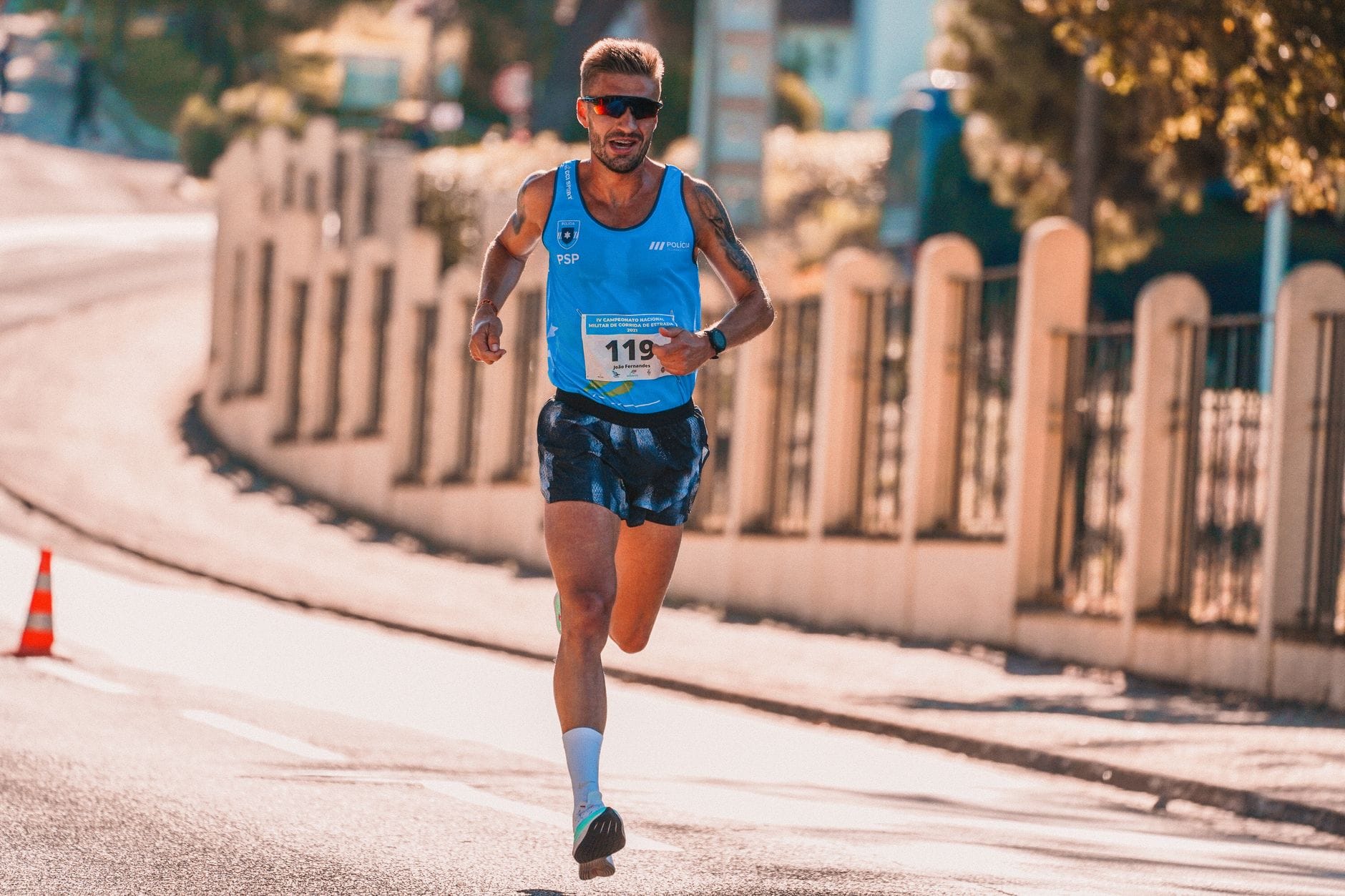
Two athletes with identical VO2 max numbers, identical training logs, and identical race weight will finish minutes apart on a 90-degree race day, and the gap has nothing to do with fitness in the way most amateurs think about fitness. It comes down to something that happens almost entirely below conscious awareness: how efficiently one athlete's body can move heat out through sweat and blood flow without stealing oxygen delivery away from working muscle. Elite programs have known this for two decades. Serious amateurs are only now starting to train for it on purpose instead of just hoping race-day heat doesn't derail the plan.
Heat acclimatization is a specific, trainable physiological adaptation, not a mental toughness exercise, and treating it as the latter is why so many well-trained amateurs blow up in the back half of a summer race despite pacing conservatively through the first half. The body that's been trained to handle heat starts sweating sooner, sweats more efficiently with less sodium loss per liter, and maintains a lower core temperature and heart rate at the same pace compared to an unacclimatized body — and those differences show up in minutes, not seconds, once a race passes the ninety-minute mark.
What Actually Adapts, and How Fast
Heat acclimatization protocols typically run 10 to 14 days of consistent heat exposure during exercise, and the adaptations arrive in a fairly predictable order. Plasma volume expands first, usually within 3 to 5 days, which is why athletes often report race-week heat sessions "just feeling easier" almost immediately — that's blood volume increasing to support both muscle perfusion and skin blood flow for cooling at the same time, a demand that overwhelms an unadapted cardiovascular system. Sweat rate and sweat sodium concentration adapt more slowly, typically requiring the full 10 to 14 days to reach a meaningfully lower sodium loss per liter of sweat, which matters directly for cramping risk in a hot race. Core temperature threshold for sweat onset also drops with acclimatization — an adapted athlete starts sweating at a lower core temperature than an unadapted one, which sounds minor until you realize it means the cooling system engages before the problem gets serious rather than after.
Two Ways to Get There
Active heat acclimatization means training in the actual heat you're preparing for — outdoor sessions during the hottest part of the day, or a heated space if the climate doesn't cooperate. This is the gold standard because it combines the heat stress with the specific movement pattern and intensity of the sport, but it's logistically hard for athletes training somewhere the ambient temperature simply isn't there yet in May for a July race. Passive heat acclimatization uses post-exercise hot water immersion or sauna sessions — typically 20 to 40 minutes at 40°C water temperature, done immediately after a normal training session while core temperature is already elevated. Research out of New Zealand's High Performance Sport program found passive protocols produce roughly 60–70% of the adaptation benefit of active heat training, which makes it a legitimate substitute or supplement when the climate or schedule doesn't allow full active protocols. It's not a lesser option out of convenience — it's a genuinely different tool that some elite programs use even when heat access isn't a constraint, because it's easier to control precisely.
The Sodium Question Nobody Answers Consistently
Sweat sodium concentration varies enormously between individuals — from roughly 200mg to over 2,000mg of sodium per liter of sweat, which is a tenfold range that makes generic hydration advice close to useless. An athlete on the high end of that range following standard sports drink guidance built around the average will underfuel sodium badly during a long hot event, and that's a direct line to the cramping and GI distress that ends a lot of otherwise well-paced races in the final third. Get an actual sweat test done if you're training seriously for hot-weather racing — several sports science labs and a growing number of running and triathlon specialty stores offer patch-based sweat sodium testing for under $100. Guessing on this one number costs people entire race results.
Where Amateurs Get the Protocol Wrong
The most common mistake is starting heat training too close to race day, treating it as a final week's addition rather than a dedicated block. Plasma volume expansion happens fast, but full sweat gland adaptation genuinely needs the 10-to-14-day window — a 3-day crash course before a hot race gets you partial benefit at best, and partial benefit doesn't show up when it matters, at mile 20 of a marathon or hour four of a long-course triathlon. The second mistake is stacking heat sessions on top of an already-maximal training load instead of substituting them in. Heat exposure is real physiological stress, and adding it as pure volume on top of peak training weeks is a documented path to overreaching, not adaptation. The fix is straightforward: swap a portion of an existing session's intensity or duration for the heat protocol rather than bolting it on as extra work. There's a real ceiling here worth naming honestly — heat acclimatization decays fast once exposure stops, typically within 2 to 3 weeks of no heat training, so a block done six weeks before race day without any maintenance sessions in between has mostly evaporated by the start line.
Building a Realistic Block
For a race three to four weeks out, the practical approach is 8 to 10 heat sessions spread across those weeks — active sessions on easier training days, since the heat load itself is the stimulus and doesn't need to be paired with a hard interval workout to work. A 30-to-45-minute easy run or ride in the heat of the day, or a 30-minute hot bath immediately post-workout on days that don't allow outdoor heat exposure, both count toward the adaptation. Track a simple marker to confirm the adaptation is happening: resting heart rate on waking, and perceived exertion at a fixed easy pace during the heat sessions themselves. Both should trend down over the 10-to-14-day window if the protocol is working. If they're not moving, something in the block — usually total heat dose or recovery between sessions — needs adjusting before race week arrives.
None of this is complicated science reserved for national team programs anymore. It's a protocol any serious amateur can run with a stopwatch, a bathtub, and two weeks of discipline, and it closes a performance gap that pure fitness training never touches.
How This Interacts With Altitude Training
Athletes who've done an altitude block sometimes assume the adaptations overlap with heat training, and they don't, or at least not enough to skip one for the other. Altitude training drives red blood cell production and improves oxygen-carrying capacity; heat training drives plasma volume expansion and sweat efficiency — related cardiovascular systems, but distinct adaptations that don't substitute for each other. An athlete arriving at a hot race off a pure altitude block without any heat-specific work will still struggle with thermoregulation exactly the way an athlete with zero altitude exposure would. The two can be combined, and some national programs do exactly that, but combining them requires careful load management — stacking full altitude stress and full heat stress in the same block without adjusting overall training volume is a fast route to the overreaching problem mentioned earlier, not a shortcut to double the adaptation in half the time.
The Mistake of Testing the Protocol Too Late
Every physiological adaptation described here needs to be tested before race day, not discovered on it. That means at least one full-distance or near-full-distance session in heat, at race pace, in the final two weeks of the block — not as a hard workout, but as a dress rehearsal for exactly how the body handles the combination of race intensity and heat stress together, including sodium intake at race-day rates rather than training rates. This is the step serious amateurs skip most often, usually because a hard heat session that close to race day feels risky. It isn't, if it's dosed correctly — one race-pace effort of 60 to 90 minutes in the heat, five to seven days out, with a full taper afterward. What it buys is certainty. A protocol that looked good in theory and in resting heart rate trends still needs one real test before you find out, for the first time, whether it holds up at mile 20 in front of everyone instead of in a quiet Tuesday session where nothing was on the line.