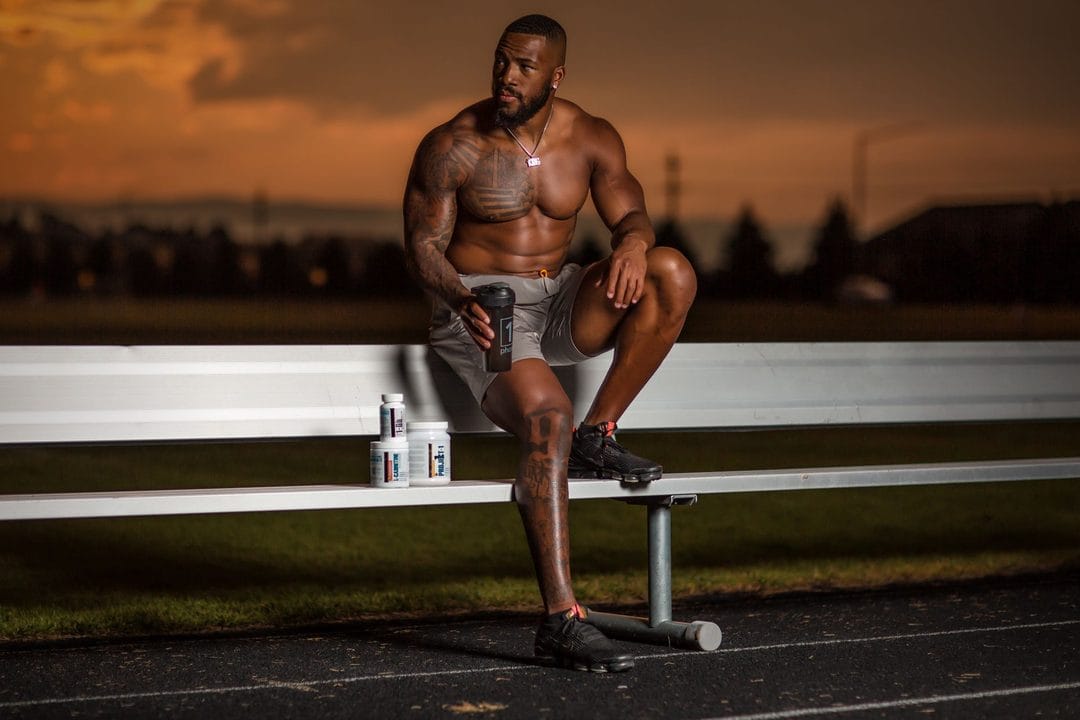
Watch a professional footballer warm down on an exercise bike for twenty minutes after a match while the amateurs are already in the pub, and you're looking at the single biggest difference between elite and recreational sport. It isn't talent, and it isn't even training load. It's that the professional treats recovery as part of the job, not the boring bit you skip when you're busy.
Recovery is where adaptation actually happens
The training session doesn't make you fitter. It breaks you down a little, and the rebuilding — which happens while you sleep, eat, and rest — is the part that makes you stronger. This sounds obvious until you notice how many serious amateurs train hard six days a week, recover badly, and then wonder why they've plateaued for two years. They've got the stress half of the equation maxed out and the adaptation half running on empty. You don't get fit from training. You get fit from recovering from training.
Elite programmes are built around this. A Premier League squad in a congested fixture run will often do almost no high-intensity work between matches, because the games themselves are the load and the days between are for getting the players back to the line. The art of high-performance coaching is mostly the art of managing fatigue — deciding when to push and, far harder, when to hold an eager athlete back from work they're desperate to do.
Sleep is the drug nobody can replicate
If there were a legal supplement that improved reaction time, reduced injury risk, sharpened decision-making, and accelerated muscle repair, every athlete on earth would take it. It exists, it's free, and it's sleep. Roger Federer was famous for sleeping close to twelve hours a day at his peak, and that wasn't indulgence — it was a calculated component of staying at the top into his late thirties in a brutally physical sport.
- Consistency of timing matters as much as total hours — the body runs on a clock, and a wildly irregular schedule blunts the deep sleep that does the repair work.
- One bad night doesn't undo you; a fortnight of five-hour nights measurably wrecks reaction time and mood.
- Naps are a legitimate tool, not a sign of laziness — many pro cyclists nap as a scheduled part of a hard training block.
Marginal gains, and why they're misunderstood
British Cycling's marginal-gains era under Dave Brailsford got reduced in the public mind to heated trousers and bringing your own pillow to hotels. The actual lesson was subtler. The small stuff only pays off once the big stuff — training, sleep, nutrition — is genuinely handled. Optimising your pillow while you're sleeping six hours a night is rearranging deckchairs. Marginal gains are the final two percent, and chasing them before you've nailed the other ninety-eight is the most common mistake ambitious amateurs make.
The part that doesn't transfer
Here's where the gap between elite and the rest of us gets honest. The professional can build their entire day around performance — sleep, food, training, physio, rest, all of it scheduled by people paid to optimise it. You have a job, a commute, kids, and a body that's no longer twenty-two. Copying a pro's recovery protocol wholesale is pointless and faintly absurd; you can't ice-bath your way out of a 50-hour week and broken sleep from a newborn.
What does transfer is the priority order. Sleep first, because it's free and it underpins everything. Then consistency over intensity, because the athlete who trains moderately for ten years beats the one who trains savagely for ten months and burns out. The hero workout that leaves you wrecked for three days is almost always a worse choice than the sustainable session you can repeat on Thursday.
What elite sport actually teaches the rest of us
Strip away the budgets and the support staff and the lesson from high-performance sport is unglamorous: the body responds to a sane, repeatable rhythm of stress and recovery, and almost nobody honours the recovery half. The professional isn't necessarily working harder than the obsessed amateur. Quite often they're working less, sleeping more, and being far more disciplined about backing off. The discipline that defines the elite isn't the discipline to grind. It's the discipline to rest when every instinct says push.