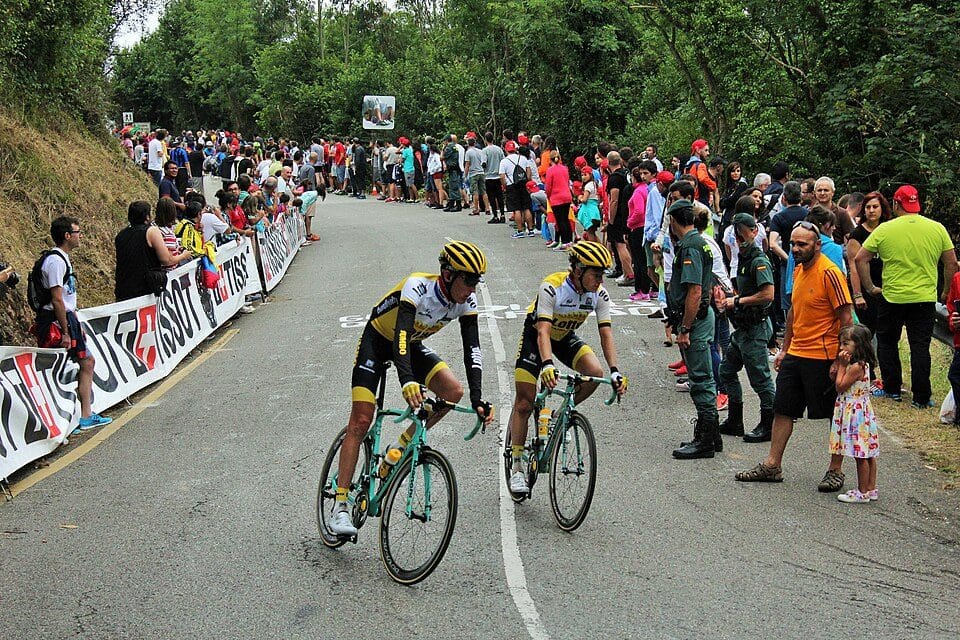
Adam Hansen started twenty consecutive Grand Tours between 2011 and 2018 — Giro, Tour, Vuelta, on repeat, year after year — and he still calls it the stupidest thing he's ever done to a human body. Most professionals who try to stack all three three-week races in a single season never get near that number. They try it once, usually as a domestique fulfilling team orders rather than chasing a result, and then they quietly make sure it never happens again. With the Vuelta a España now underway and running through to 13 September, the peloton is once again splitting into two groups: the riders who skipped it to protect a season already spent on the Giro and the Tour, and the small, mostly unglamorous group who are lining up for a third three-week race in four months.
Why the Triple Almost Never Happens at the Sharp End
Tadej Pogačar's 2024 Giro–Tour double was treated as a throwback to a different cycling era, and it was — nobody had won both races in the same season since Marco Pantani in 1998. What got less attention is that Pogačar didn't start the Vuelta that year. Neither did Jonas Vingegaard after his own Tour campaign. This isn't coincidence or a scheduling accident. Two Grand Tours already put a rider through roughly forty-two days of racing across five-plus weeks, over 6,000 kilometres combined, with the kind of daily energy expenditure — 5,000 to 6,500 kilocalories on a genuine mountain stage — that leaves even the most disciplined nutrition plan unable to keep pace with the deficit. Add a third one and you're not managing fatigue anymore. You're negotiating with it.
Sports scientists who work with WorldTour teams describe the accumulated toll in fairly blunt terms once you get them off the record. Riders typically lose 3 to 5 kilograms of body mass over a single Grand Tour, largely lean muscle rather than fat, and most of that doesn't come back in the two or three weeks a team gives a rider before the next block starts. Testosterone and cortisol ratios — one of the more reliable blood markers for detecting overreaching — routinely sit outside healthy range by the final week of a three-week race and can take a month to normalise. Sleep quality tends to collapse in the same window, not because riders can't find the time to rest but because the nervous system stays wired from the day's effort long after the legs have stopped moving. Immune function drops with it, which is the boring, unglamorous reason so many Grand Tour riders pick up a cold or a chest infection in the final week rather than a dramatic crash. Stack a second Grand Tour on top of a body that hasn't recovered from the first, and you're not building fitness. You're spending a reserve that was never designed to be spent twice in one summer.
The Riders Who Actually Do the Triple
Here's the thing nobody advertises: the riders who complete all three Grand Tours in one year are almost never the ones on the start-list graphics or the team's marketing material. They're domestiques — the water carriers, the mountain lieutenants, the men whose job for three weeks is to protect a leader and disappear into the peloton for the rest of the stage. A team doesn't send its GC rider to do the triple because the maths doesn't work: you cannot arrive at a third Grand Tour in peak condition after two, and no sponsor wants their leader visibly cooked on television in September. But a strong rouleur who isn't chasing a result can absorb the accumulated fatigue differently, because the target isn't a stage win or a podium — it's simply finishing, staying upright, and doing a job for a leader who's often fresher because they skipped one of the earlier two races.
What the Team Actually Manages Between Races
The block between the Tour finishing in late July and a Vuelta start in late August is short — roughly four weeks — and most of it isn't training in the conventional sense. It's controlled unloading followed by a rapid re-build, and teams that get it wrong end up with a rider who starts the Vuelta still carrying Tour-level fatigue markers. The standard approach among WorldTour outfits now includes:
- A genuine off-bike block of 5 to 7 days immediately post-Tour — not easy spinning, actual rest, because the nervous system needs longer to recover than the legs
- Blood panels checked around day 10 to confirm ferritin, testosterone and white cell counts have started trending back toward baseline before any real training load resumes
- A short altitude re-exposure, often 10 to 12 days at a camp like Sierra Nevada or Livigno, aimed less at building new fitness and more at nudging haemoglobin mass back up after weeks of racing depletion
- A deliberate reduction in race-week intensity work in the final week before the Vuelta start — teams accept a rider arriving slightly undercooked rather than risk one arriving already fried
None of this guarantees anything. Some riders respond to that four-week window and race the Vuelta stronger than either of the previous two Grand Tours. Others never really arrive — they start, they survive the first week in the grupetto more often than not, and their team quietly reframes their role from support rider to simply getting a jersey to the finish in Madrid.
The Case Against Doing It — and the Case For
The honest recommendation from most sports scientists is straightforward: don't do the triple unless the team has a specific tactical reason, because the injury and illness risk in the final week of a third Grand Tour climbs sharply once accumulated fatigue crosses a certain threshold. Overuse injuries — patellar tendinopathy, lower back strain from compromised pedalling mechanics, stress reactions in the tibia — show up disproportionately in riders on their third three-week block of the year, and a team that pushes a rider through that risk for marginal benefit is making a bad trade. That's the case against it, and it's a strong one.
But there's a real counter-argument, and it's not just romantic nostalgia for the Adam Hansen era. A handful of riders genuinely build form across a season the way some athletes build strength across a career — cumulatively, not through isolated peaks — and for those riders, a third Grand Tour late in the year can produce their best form of the season rather than their worst. Primož Roglič has shown flashes of exactly this pattern doing Giro–Vuelta doubles, arriving at the second race sharper than he left the first. It doesn't apply to everyone, and predicting in advance which riders respond that way rather than breaking down is still more art than science inside most performance departments.
What This Means for the Riders Racing Right Now
Watch the composition of any Vuelta start-list that includes riders who also finished the Tour, and you'll see the pattern play out in real time on the road. The ones who look genuinely competitive in week two and three are almost always riders who skipped the Giro entirely and treated the Tour as their sole spring-and-summer target, arriving at the Vuelta with one Grand Tour of fatigue rather than two. The ones doing the actual triple — Giro, Tour, Vuelta, all in one year — are riding for someone else's result, not their own, and that's not a coincidence born of humility. It's the only version of the calendar that the human body can currently survive at a competitive level.
None of which means the triple will disappear. As long as teams need domestiques who can hold a wheel in week three of a race their leader never has to finish, someone on every WorldTour roster will end up doing the job Hansen made a career out of — unglamorous, largely uncelebrated, and closer to the physiological limit than almost anything else in professional sport. Ask most of them afterwards whether they'd do it again, and the honest ones don't say yes straight away.