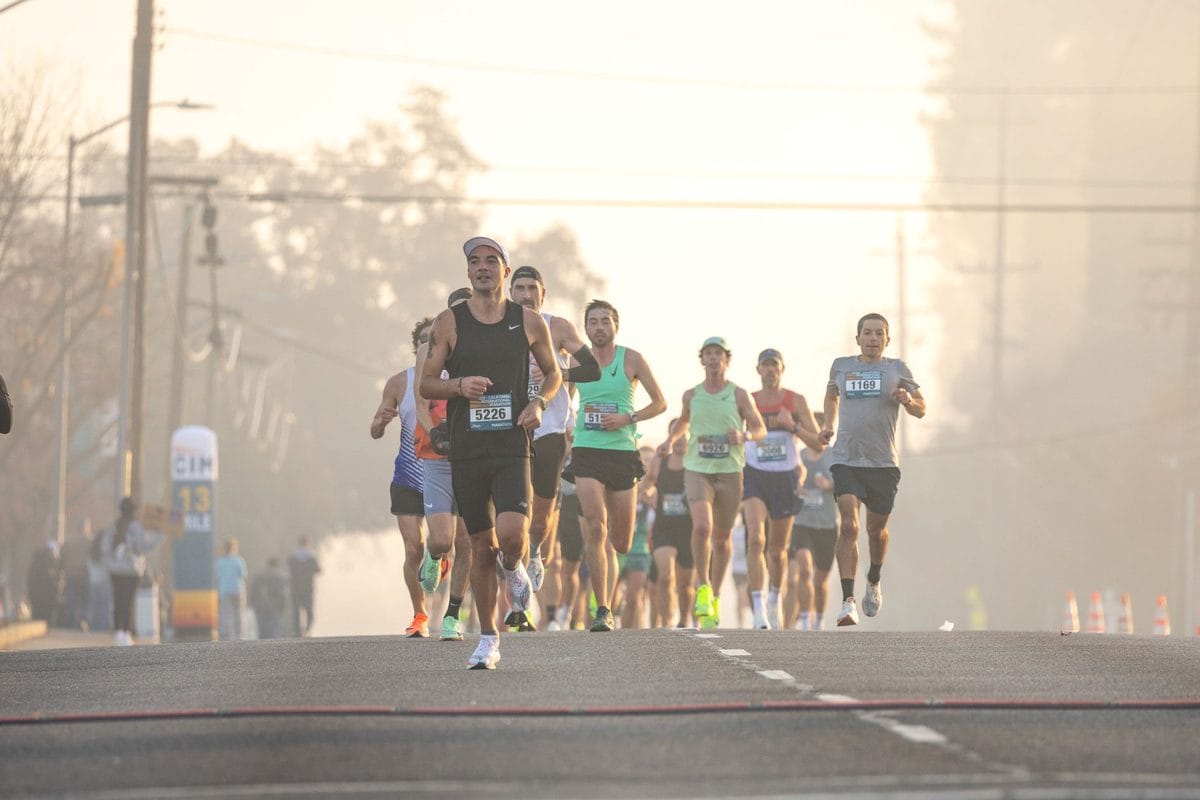
For most of marathon history, two hours functioned less like a number and more like a wall — the kind of round figure exercise physiologists used in textbooks to illustrate a limit nobody expected to see broken in their working lifetime. That changed in April, when Sabastian Sawe ran 1:59:30 at the London Marathon under record-eligible conditions, becoming the first runner to break two hours in an official, record-ratified race. The performance took the sport somewhere it had circled for a decade without landing. It did not, on its own, answer the more interesting question: was London a perfect alignment of one runner's form, one day's weather and one course's layout, or is the marathon actually run faster now than it was five years ago, full stop.
That question gets its first real stress test on September 27, when the BMW Berlin Marathon fills the city's wide boulevards with more than 56,000 runners, including a start-list built specifically around record pace. Berlin has produced more marathon world records than any other city on earth — Eliud Kipchoge broke it there twice, in 2018 and again in 2022, and Tigst Assefa's women's mark fell there in 2023 before Ruth Chepngetich lowered it further in Chicago the following year. The city didn't earn that reputation by accident. Race organizers, shoe brands and elite management agencies all treat Berlin as the marathon equivalent of a controlled lab environment, and understanding why tells you almost everything about how fast marathon running has actually gotten — not just for the athletes chasing records, but for the amateur runner deciding whether a $190 pair of racing shoes is worth it for a weekend 10K.
The Course Physics Nobody Talks About
Ask an elite coach why Berlin runs fast and the answer isn't scenery. It's geometry. The course loses roughly 35 meters of net elevation from start to finish, spread so gradually across 26.2 miles that no single stretch registers as a hill, and it avoids the sharp corners that force runners to decelerate and re-accelerate — a hidden tax that costs far more energy over a marathon than most recreational runners realize. London and New York both have tighter turns and rolling terrain that break rhythm. Berlin's roads run wide and mostly straight through the former East and West, which matters more than it sounds: a runner holding 4:15 per kilometer for two hours doesn't want to fight a 90-degree turn every mile, because each one strips away momentum that has to be rebuilt from nothing.
Weather does the rest of the work. Late September in Berlin typically sits in the mid-50s Fahrenheit at the 9:15 a.m. start time, cool enough to keep core temperature manageable without the biting cold that stiffens muscles in a March race. Humidity tends to run low compared to the fall marathons in Chicago or New York, and organizers have leaned into this by scheduling the elite start early enough to finish most of the front pack before the day warms. None of this is exotic knowledge — every serious marathon coach can recite the numbers — but it explains a pattern that otherwise looks like coincidence: the same course keeps producing the same outcome, year after year, because the variables that usually wreck a fast attempt have mostly been engineered out.
The Pacing Playbook Behind Every Fast Berlin
None of that geometry matters without the pacing operation that makes a record attempt survivable. Elite race organizers now build formations of paid pacers — typically four to six runners for a men's attempt — who run in a shifting wedge designed to cut wind resistance for the lead athlete, dropping out in staggered waves at 25K, 30K and 35K as their own fitness runs out. The formation isn't improvised on the day. Agents and coaches map it out weeks in advance, matching each pacer's personal best to the exact split they'll need to hold, and Berlin's flat profile is precisely what makes that kind of precision scheduling possible in the first place — you can't plan a pacer handoff around a hill you don't know the shape of.
What's changed since Sawe's London run is how explicitly organizers are now talking about record pace in public startlists, rather than treating it as an open secret. Berlin's elite field announcement this year listed pacers through halfway, a level of transparency that would have been unusual five years ago. Whether anyone actually threatens 1:59 in Berlin this weekend is impossible to know in advance, and it would be dishonest to pretend otherwise — the honest framing is that Berlin gives the sport its best chance yet to see whether London's number gets challenged again this calendar year, not a guarantee that it will.
The Shoe Arms Race, Priced Out
Underneath the pacing strategy sits a piece of equipment that's done more to reshape marathon times over the past six years than any single training method: the carbon-plated super shoe. Nike's Alphafly 3 retails for roughly $275 and remains the shoe most associated with the brand's record-chasing athletes, built around a stiff carbon plate and two air pods in the forefoot that return energy most runners can genuinely feel on a long tempo run. Adidas answers with the Adizero EVO SL at $150 for training-adjacent use and the limited-release Adizero Pro Evo, which has retailed north of $500 in past cycles specifically because the brand caps production and treats it as a record-day tool rather than a shelf product.
Here's the part shoe marketing tends to leave out: stack height and plate stiffness that help a 2:05 marathoner can actively hurt a 3:30 recreational runner, because the same geometry that returns energy at high cadence becomes unstable at slower ground-contact times. A $275 shoe bought for a first marathon attempt is, for a large share of buyers, worse than a $140 daily trainer with a softer, more forgiving midsole. Don't buy the elite shoe because Berlin's elite field wears it — buy the shoe that matches your actual pace and your actual mechanics, and get fitted at a specialty running store rather than guessing from a review.
What This Means If You're Running for a PR, Not a Record
More than 56,000 people are running Berlin this year, and the overwhelming majority of them will never come within an hour of the elite pace groups fighting the wind at the front. That doesn't mean the course's design is irrelevant to them. A flat, well-paced course is exactly as valuable to a runner chasing a 3:45 as it is to one chasing 1:59 — the physics of momentum loss at corners and the metabolic cost of even mild hills apply at every pace, just proportionally. Amateur coaches increasingly build the final six weeks of marathon training around race-specific pacing drills on flat terrain for exactly this reason, matching goal race conditions rather than defaulting to whatever hills happen to be nearby.
The training block that gets an amateur runner to Berlin in shape looks different than it did a decade ago, too. Marathon-specific volume at or near goal pace has crept up across most structured plans, mirroring what elite training groups do at altitude camps in Kenya's Rift Valley and Colorado's Front Range, even though most recreational runners will never see 8,000 feet of elevation in their training log. What hasn't changed is more basic: a taper that actually reduces volume in the final two weeks, sleep that gets protected rather than sacrificed in race week, and a fueling plan tested in training rather than improvised on the course. Skip any of those three and the shoes, the course and the pacers stop mattering.
Sawe's 1:59:30 will get cited in marathon coverage for years regardless of what happens in Berlin this weekend — it's the kind of number that reorganizes how a sport talks about its own limits. But one fast race in London doesn't tell a coach, a shoe brand or a 45-year-old chasing a Boston qualifier whether the marathon has genuinely gotten faster or whether one exceptional athlete had one exceptional day. Berlin's flat roads, disciplined pacing units and late-September weather window exist precisely to answer that kind of question, which is why the sport's serious observers will be watching splits at 25K far more closely than the finish-line clock.