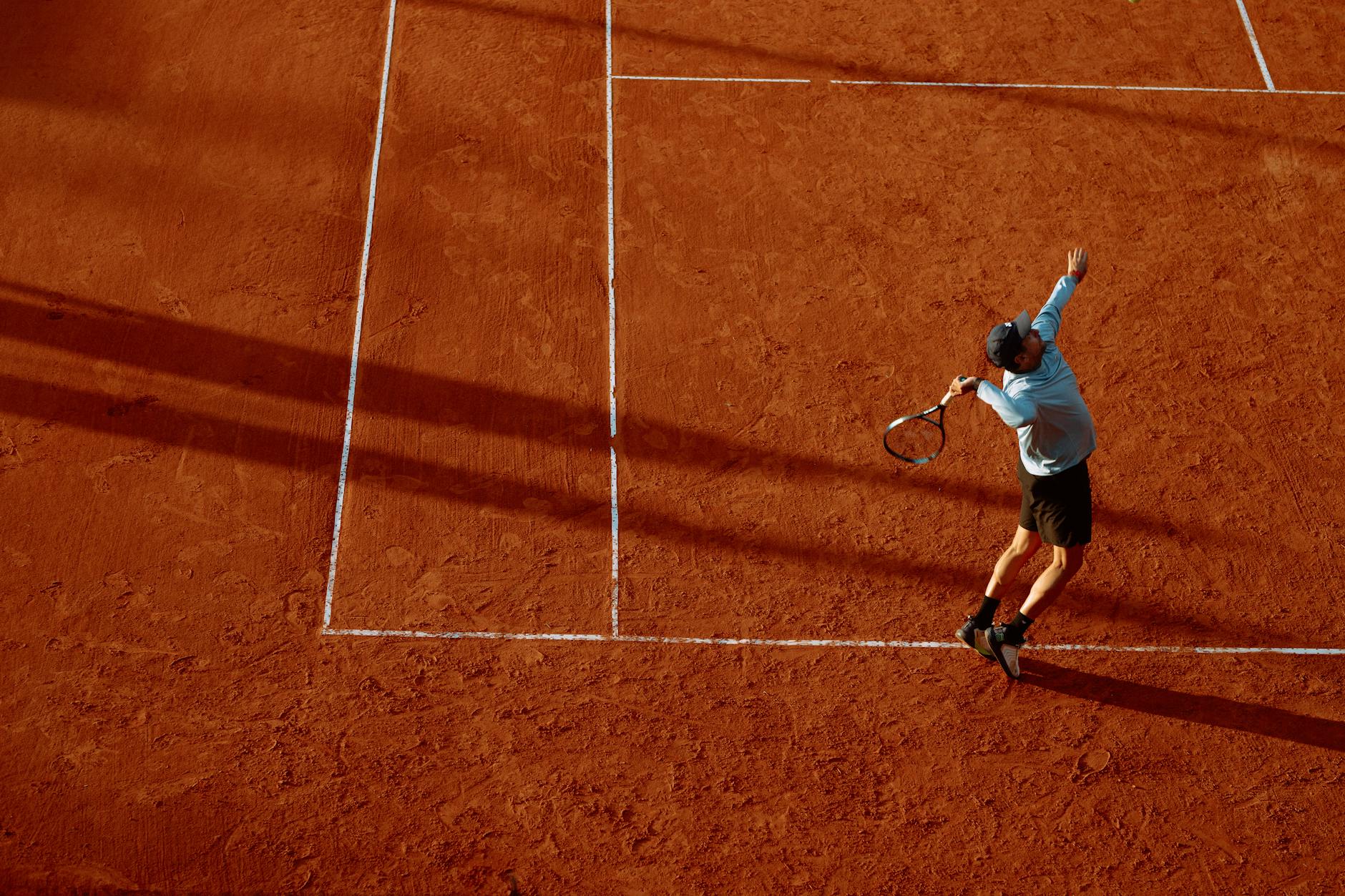
A five-set match on the hard courts of Melbourne is a test of will. A five-set match on the clay of Court Philippe-Chatrier is a test of how much running a human body can absorb before it stops cooperating. The 2026 Roland-Garros men's final, which ran past four hours and into a deciding set where both players were visibly cramping and still chasing balls into the corners, made the difference impossible to ignore. Clay does not reward the biggest serve or the cleanest backhand. It rewards the man who can still move in the fourth hour.
The numbers behind that are not soft. Average rally length at Roland-Garros runs roughly 30–40 per cent longer than at Wimbledon, because the surface slows the ball and gives defenders time to reach shots that would be winners anywhere else. A typical Grand Slam final on grass might see total distance covered in the region of three kilometres per player. On Paris clay, the same scoreline can push a player past five kilometres of sprinting, sliding and recovering — and clay sliding loads the hips, groin and lower back in a way no other surface does, because every change of direction is a controlled skid rather than a hard plant.
Why the conditioning has to start months out
The men who contend deep into the second week in Paris do not build that capacity during the tournament. They build it in the off-season and during the clay swing through Monte-Carlo, Madrid and Rome that leads in. The physical signature of a clay specialist is aerobic base far beyond what the casual fan assumes a tennis player needs — VO2 max figures in the elite men's clay field sit in territory you would associate with serious endurance athletes, not power-sport competitors.
There is a reason Rafael Nadal's old training blocks became a template the whole tour copied. The work was not glamorous: long aerobic sessions, repeated high-intensity intervals that mimic the stop-start demand of a long rally, and an obsessive amount of eccentric strength work for the quads and adductors that take the brunt of every slide. A player who skips that base can win three sets on talent. He cannot win five against someone who did the work, and Paris is the one Slam where the match regularly goes the full distance.
The recovery problem nobody outside the locker room sees
The cruelty of the format is the turnaround. Win a four-and-a-half-hour third-round match on Saturday evening and you may be back on court Monday against a fresh opponent who finished in straight sets. The body's ability to clear that fatigue — to restore glycogen, repair muscle damage and calm an inflamed nervous system in under 40 hours — becomes as decisive as anything that happens during a point. This is where the modern support teams earn their keep, with sleep protocols, targeted nutrition timed to the minute, and cold and compression work that the previous generation simply did not have.
It is worth being honest about the limits of all this, though. Conditioning buys durability, not immunity. The 2026 final still ended with both men cramping, because beyond a certain point the human body on clay simply runs out, and no amount of sport science fully closes that gap. The winner was not the fitter man in some absolute sense — he was the man whose cramps arrived two games later than his opponent's. On a surface this demanding, that margin is the whole match.
What amateur and club players should actually take from it
The lesson for anyone who plays competitively below the professional level is not to copy a pro's training volume — that would break most weekend players inside a fortnight. The lesson is about the order of priorities. Clay-court results are won by movement and stamina far more than by shot-making, and most club players have the relationship backwards, spending their practice hours grooving forehands while neglecting the footwork and conditioning that decide tight matches.
- Train the slide deliberately if you play on clay or artificial clay. The recovery step out of a slide is a learned skill, and players who never practise it lose half a step on every wide ball.
- Build an aerobic base in the weeks before your season. Two or three longer runs or bike sessions a week will do more for your third-set results than another bucket of serves.
- Strengthen the adductors and hip flexors specifically. These are the muscles that cramp first and tear most often on clay, and they are the ones recreational players almost never train.
The men who walk off Chatrier on the final Sunday have spent years building a body that can survive the surface before they ever worry about beating an opponent on it. That is the part the highlight reel hides — and the part that decides who is still standing in the fifth set.