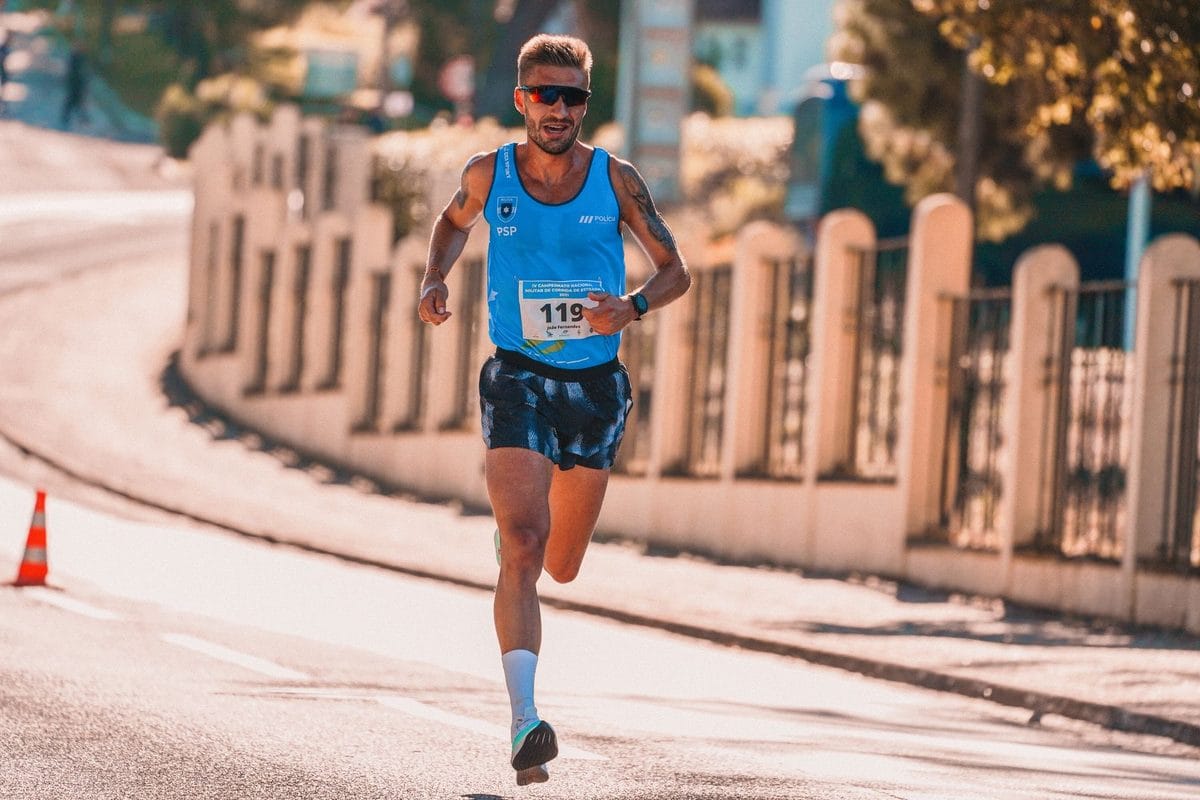
The fittest athlete on the start line in July is rarely the one who wins. The one who wins is the one whose body has already learned to handle the heat — and that's a training adaptation most serious amateurs never deliberately build, even though it moves race-day performance more than almost anything you can do in the final three weeks of a block. Heat acclimatization is the most under-trained edge in summer endurance sport, and with the 2026 race calendar stacked through a forecast-hot June and July across most of the US, it's worth understanding exactly what's happening inside the body and how to trigger it on purpose.
Start with what heat actually does to performance. When core temperature climbs past roughly 38.5°C, the body diverts an increasing share of blood flow to the skin to dump heat. That blood is no longer available to working muscle, so for any given pace your heart rate drifts upward and your perceived effort climbs — the phenomenon every runner knows as the back half of a hot race feeling impossibly hard at a pace that felt easy in spring. Plasma volume drops as you sweat, blood thickens, and the cardiovascular system is doing two jobs at once with less fluid to do them with. None of that is a fitness problem. It's a thermoregulation problem, and it responds to its own specific training.
What the adaptation actually changes
The science here is unusually clean for sport physiology. Across a properly structured heat block — somewhere between 5 and 14 consecutive days of deliberate heat exposure — three measurable things happen. Plasma volume expands by 4 to 15 percent, which means more blood to share between skin and muscle. You start sweating earlier and more, and that sweat gets more dilute, so you lose less sodium per liter. And your core temperature at any given workload settles lower. The net effect at the pointy end is real: well-acclimatized athletes routinely hold 4 to 8 percent more power or pace in hot conditions than they could before the block, and the plasma volume bump even gives a modest bonus in cool conditions afterward.
The protocol that the lab work supports isn't complicated, which is exactly why so few amateurs bother. You need your core temperature elevated and held there for roughly 60 to 90 minutes a day. That can be an easy-pace ride or run done in the heat of the afternoon, an indoor session with the fans off and the windows shut, or — the method that most consistently works for time-crunched athletes — a hot bath or sauna sit immediately after a normal cool-morning workout. Twenty to forty minutes at around 40°C in a hot bath, taken right after training while your core is already warm, drives the adaptation without adding meaningful training stress. That last point matters: heat acclimatization is a separate stressor layered on top of your normal load, not a replacement for it.
The timing trap that wastes the whole block
Heat adaptation fades fast. Most of the gain is gone within two to three weeks of stopping, and meaningful decay starts within four or five days. This is the single most common mistake — athletes do a heat block a month out from their goal race, lose most of it, and show up no better off. The block has to land in the final week to ten days before the event, with the last heat session no more than three or four days out. Build it, then race on it before it leaks away.
The fueling and hydration piece
None of the physiology helps if you arrive at the start line already behind on fluid. Sweat rates in genuine heat commonly run 1.2 to 2.0 liters per hour for a working endurance athlete, and you simply cannot drink that fast during effort — the gut won't absorb it. The acclimatized athlete still has to pre-hydrate in the 24 hours before, take in sodium aggressively (think 700 to 1,200 milligrams of sodium per liter of fluid in real heat, not the watered-down concentrations most sports drinks ship at), and accept that they'll finish at a fluid deficit and that's normal. Sodium is the lever people get wrong most often. The cramping that ends so many hot races late is far more often a sodium and pacing failure than a fitness one.
There's a counter-point worth naming, because the heat-training world oversells it. Acclimatization does not make you immune. It raises the ceiling at which you function, it doesn't remove the ceiling. Push the pace too early in genuine heat and you will still cook, adapted or not — the difference is that the adapted athlete can hold a sensible hard pace where the unadapted one is already in trouble. The adaptation buys you margin, not a free pass to ignore the conditions.
How to build it into a real 2026 summer
For a goal race in mid-July, the practical plan looks like this. Train normally through June. In the final 10 to 12 days, add a daily heat session — either move an easy aerobic workout to the hottest part of the afternoon, or add a 25-minute hot bath straight after your morning session. Keep the rest of your training intensity where your plan already has it; the heat work is additive and easy by design. Hydrate hard, salt aggressively, and keep the final heat exposure within three or four days of the gun.
The athletes who do this arrive at a hot start line having already had the worst of the suffering in their own bathroom over the preceding week. The ones who skip it meet the heat for the first time at kilometer one, and the race tells them about it by kilometer twenty.