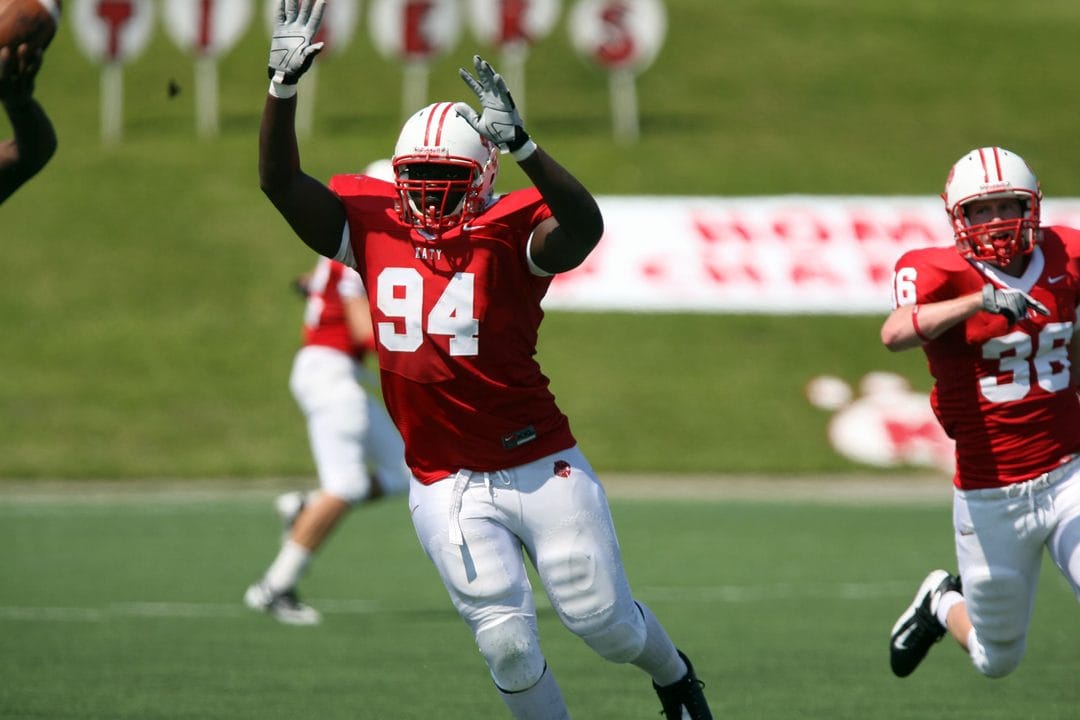
Every August, the same story repeats itself across NFL training facilities: a starting running back pulls up mid-sprint clutching the back of his thigh, a wide receiver limps off during a routine route-tree drill, and beat writers start counting how many players have already landed on the "soft tissue" section of the injury report before a single regular-season snap has been played. This year's camps produced the usual crop — hamstrings, groins, calves, the connective tissue that never makes a highlight reel until it fails. By the time Week 1 kicks off in mid-September, most 53-man rosters will have absorbed at least two or three of these injuries, and a handful of teams will already be without a starter they were building the offense around. The pattern is old enough that it has a name inside strength and conditioning departments: the "ramp problem." It isn't bad luck, and it isn't simply the price of playing a violent sport. It's a predictable consequence of how training load is structured between the end of the offseason program and the first competitive snap, and the science behind why it keeps happening is better understood than the injury reports suggest. Coaches talk about camp as a fitness test; sports scientists know it's actually a stress test the body frequently fails in the same three or four ways, year after year, roster after roster.
The workload spike hiding inside every training camp
Sports scientists track a metric called the acute:chronic workload ratio, or ACWR — the relationship between what an athlete did in the past seven days versus their rolling four-week average. Tim Gabbett's research on elite team-sport athletes, published in the British Journal of Sports Medicine, found that a ratio above roughly 1.5 sharply increases soft-tissue injury risk, while ratios in the 0.8–1.3 range are protective. NFL training camp is almost engineered to blow past that number. Players spend the offseason doing controlled, self-paced conditioning, then arrive at camp and are immediately exposed to two-a-days, full-speed 1-on-1s, and team periods with GPS-tracked sprint counts that dwarf anything in their spring program. That spike is worst for skill-position players who cover ground at or near top speed — receivers, cornerbacks, running backs — because hamstring strain risk correlates directly with high-speed running exposure, not total conditioning volume. A player can be aerobically fit from months of offseason work and still be dangerously underprepared for the specific demand of sprinting at 95% of his max velocity in week two of camp, because nothing in a non-contact offseason program replicates that stress. This is the mechanism, not a guess: sprinting recruits the hamstring eccentrically during the late swing phase, and eccentric strength is the single most trainable protective factor against strain — which happens to be the quality most players lose fastest once padded practices stop in January.
Why the hamstring specifically keeps failing
Ask any team's director of sports performance which muscle group dominates the August injury report, and hamstrings will be the answer without hesitation. The biceps femoris, the outermost of the three hamstring muscles, absorbs the highest eccentric load during sprinting and has the worst blood supply of the group — a combination that makes it both the most likely to strain and the slowest to fully remodel afterward. A 2019 meta-analysis in the British Journal of Sports Medicine covering more than 8,000 athletes found that structured Nordic hamstring curl programs cut hamstring injury incidence by 51%, and reduced re-injury rates by an even larger margin. That number has been public for six years now. Most college programs still don't run Nordics as a standing protocol, and plenty of NFL rookies arrive at their first camp having never done one under supervision.
Veterans aren't automatically safer, either — the injury curve actually has two peaks: players in their first two professional seasons, and players over 29 whose tissue elasticity has declined faster than their training age would suggest. A 33-year-old receiver with a decade of NFL-quality eccentric work behind him is often better protected than a rookie in his first full-contact camp, which is the opposite of what most fans assume when a young, "explosive" player goes down clutching his leg.
What separates the teams that manage this well
Most of what actually prevents these injuries is unglamorous enough that nobody bothers reporting on it.
Load monitoring has become standard equipment — Catapult and STATSports GPS vests are on nearly every practice field in the league — but wearing a tracker and acting on its data are two different disciplines, and the gap between them is where most soft-tissue injuries live. The strongest programs don't just collect sprint-distance numbers; they use them to cap high-speed exposure for individual players in individual weeks, then rebuild that ceiling gradually instead of running the same team-wide practice script for all 90 players regardless of who spent the offseason recovering from surgery and who didn't.
- Eccentric hamstring loading two to three times weekly, starting well before padded practices begin — not bolted on once camp is already underway.
- Individualized sprint-volume caps pulled from GPS data rather than a single practice schedule applied to the entire 90-man roster — no two players get the same ramp, because no two players arrived at camp carrying the same offseason workload.
- A defined reconditioning window of roughly ten to fourteen days for any player who missed more than a week of offseason work, whether from injury, a holdout, or personal reasons — a window most position coaches resent, because it costs practice reps against a roster spot they need evaluated before final cuts.
That last point is the one front offices least want to hear. Cutting a returning veteran's reps in half during the most competitive stretch of camp, right when coaches are deciding who starts Week 1, runs directly against every incentive in the building. The teams that hold the line on it anyway tend to be the ones whose best players are still on the field in December, not the ones with the flashiest August practice reports.
What this means heading into September
None of this is exotic. Nordic curls cost nothing beyond a partner and a padded surface. GPS vests are already league-wide. The acute:chronic workload framework has been peer-reviewed and publicly available for over a decade. The gap isn't access to the science — it's whether a training staff has the authority to override a head coach's practice plan when the data says a specific player needs pulling back, and whether ownership is willing to accept a quieter camp in exchange for a healthier October.
If you're reading camp reports and trying to judge which rosters are actually built to last, a few signals are worth tracking more closely than the highlight-reel plays:
- Any "tightness," "maintenance day," or "veteran rest" language in the first two weeks of August — clubs rarely announce an actual strain until it has already cost a practice or two, so the euphemism usually arrives first.
- Which teams run individualized reconditioning protocols for late-arriving or previously injured players — the best staffs treat this as non-negotiable, not as a bonus if the schedule allows for it.
- Whether a player who missed a hamstring strain returns to full sprint work inside two weeks — tissue's structural recovery lags well behind the disappearance of pain, and a fast comeback on the injury report is often the setup for the re-strain in October.
The teams that get this right rarely make headlines for it in August, because a boring camp with a full injury report of nobody is exactly what disciplined load management is supposed to produce. The teams that get it wrong make headlines twice — once when the hamstring goes in week three of camp, and again when the same player re-strains it in Week 6 of the regular season, having never been given the two extra weeks his tissue actually needed.