Elite endurance sport is entering its most heat-exposed stretch of the year, and three governing bodies — cycling's UCI, World Athletics and the tennis tours — are relying on formal, threshold-based weather protocols rather than individual judgment calls to decide when a stage, a road race or a match crosses from demanding into dangerous. This August, all three systems are tested at once: the Vuelta a España opens in Spain, the US hard-court tennis swing runs through New York's summer humidity, and marathon squads build toward autumn championship season.
Cycling's Extreme Weather Protocol
The UCI's Extreme Weather Protocol, agreed jointly with the riders' union Cyclistes Professionnels Associés (CPA), allows race organizers and rider representatives to shorten, neutralize or cancel a stage when heat, cold, wind or snow crosses agreed safety limits. Introduced after a string of weather-disrupted races in the early 2010s, including stages cut short by extreme cold and snow, it now covers heat exposure on the same joint-decision basis.
Under the protocol, the call sits with a panel rather than a single team director or a race jury acting alone. That structure matters most in a three-week Grand Tour like the Vuelta, where riders cover mountain stages in the hottest part of the Iberian summer and team doctors have limited ability to intervene once a stage is already underway.
A Flag System Born From Doha
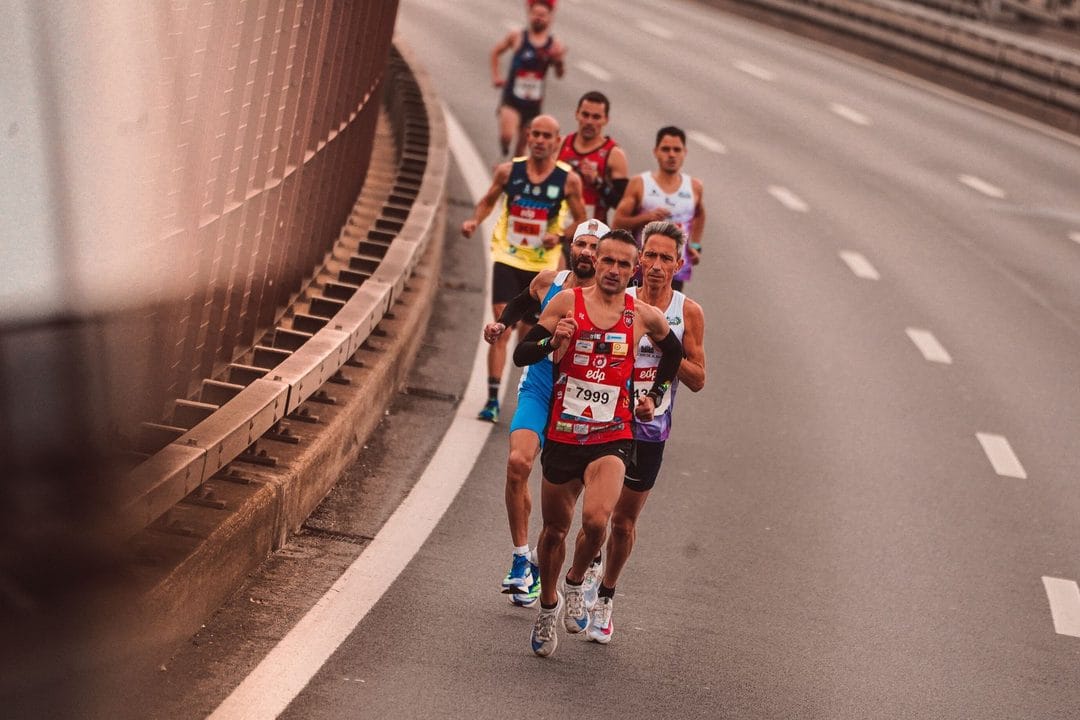
World Athletics, meanwhile, uses a separate wet-bulb globe temperature (WBGT) flag system for road races and race walks, color-coded from green through yellow and red to black, with black signaling conditions judged unsafe for competition without modification. Its origin traces to the 2019 World Championships marathon in Doha, moved to a midnight start after organizers ruled daytime WBGT readings too dangerous — a race that still saw a large share of the field fail to finish.
Boston and Tokyo, among other city marathons, have since adopted versions of the same flag framework for their elite and mass-participation fields, adjusting pacing advice, medical staffing and, in extreme cases, start times based on the color reached on race morning.
Tennis Draws Its Own Line
At several hard-court events, a WBGT-based extreme heat policy triggers a mandatory ten-minute break between the second and third sets in best-of-three matches, or roof closure at venues equipped with one, once conditions cross the tournament's set threshold. On-court incidents in which players needed medical treatment for heat illness during afternoon matches pushed tours toward writing the rule into competition regulations, rather than leaving the call to a chair umpire in the moment.
Why August Concentrates the Risk
What separates this month from the rest of the endurance calendar is overlap: a three-week Grand Tour, the build-up to autumn marathon majors, and a hard-court tennis swing all run through peak Northern Hemisphere heat at once, across Spain, the eastern United States and multiple marathon training bases. The shift across all three sports is procedural rather than cultural — heat management has moved from a race-day judgment call to a protocol fixed in the rulebook before the season starts, with the threshold, not the thermometer alone, deciding when racing stops.