The session that feels easy and costs the most
Ask a runner or a cyclist about winter training and you will hear the same two complaints. The fingers go numb, and the first ten minutes feel like running through wet cement. Most athletes file the second complaint under "normal" and move on. That is a mistake, because cold air is doing something to the body that a thermometer on the wall does not show.
Christopher Kotarsky, an exercise physiologist at the University of Cincinnati, puts the core problem plainly: "Cold weather specifically is really good at stealing our body heat." A body working hard in the cold has to defend two things at once. The muscles need to stay warm enough to produce force efficiently, and the core needs protecting from the heat that keeps leaving through the skin and the extremities. Some of your effort goes to keeping warm rather than to the session you planned.
What the 2026 ski mountaineering data shows
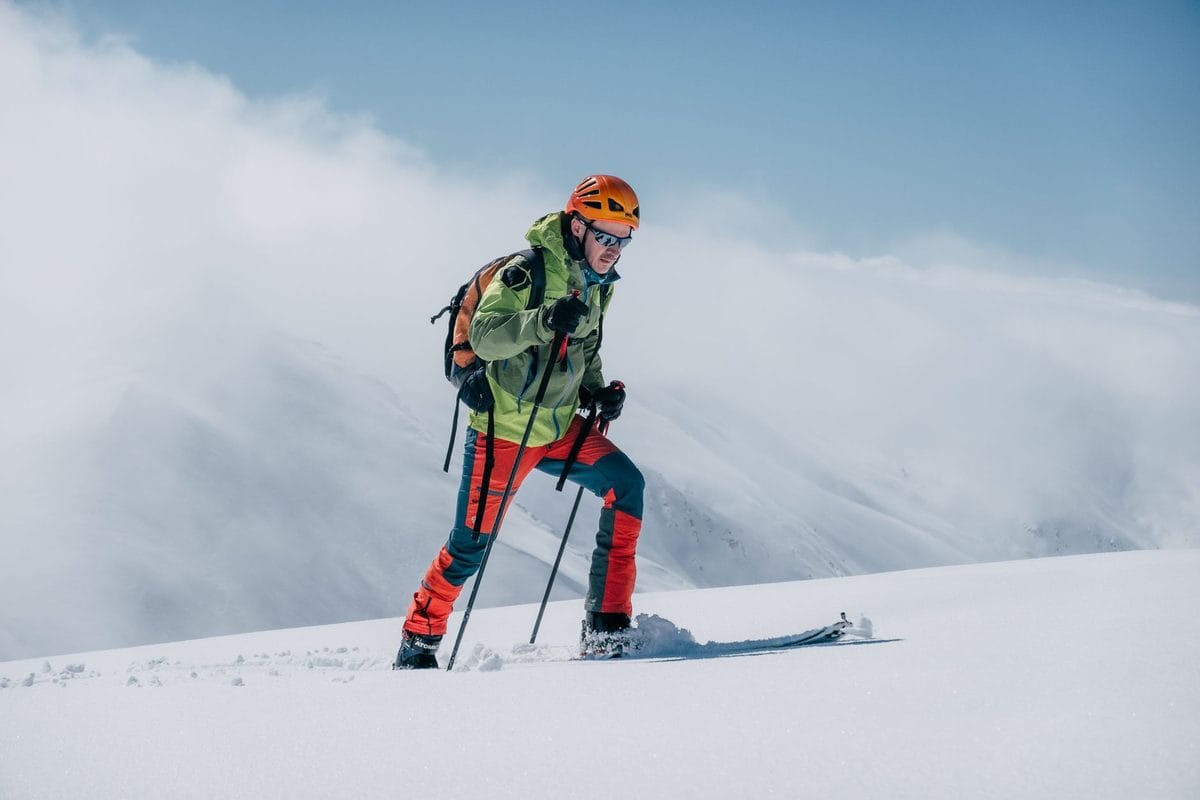
The most detailed recent measurement comes from Dünnwald and colleagues, whose 2026 study in Frontiers in Physiology followed elite ski mountaineers through simulated races in cold, high-altitude conditions. Ambient temperature ran from -8.3 °C to 1.3 °C, wind chill reached -11 °C, and each uphill run began at 2,600 metres. The team tracked core and skin temperature in 13 athletes, ten men and three women.
Skin temperature fell at every site measured, and the hands and thighs were the coldest. The paper's figures differ slightly between the abstract and the results section, but the hand averaged roughly 21 to 22 °C and the thigh roughly 22 to 23 °C. Core temperature told a more mixed story. Just over half of the athletes, 54 per cent, lost core heat, by an average of 0.8 °C, with the lowest reading at 36.5 °C. The other 46 per cent held their core steady or pushed it up.
The speed result is the one most coaches will want to argue with. Uphill pace stayed at about 1.6 km/h across the intervals. It showed only a tendency to fall in the later runs, and that tendency did not reach statistical significance. The authors also state that the temperature changes "were not related to uphill speed." Heat loss in this group did not translate into a slower climb. Read that carefully: it tells you the body had reserves, not that the cold is harmless.
Now the caveats, because one study does not settle anything. The authors say the sample was small, that they could not analyse core temperature from every ingested pill because of technical problems, and that the findings may not carry over to recreational athletes. They also did not measure clothing insulation or garment wetness, so the study cannot separate the cold from what the athletes were wearing. Treat the numbers as a snapshot of elite skiers on one course, not as a training prescription.
Cold is not the same problem as altitude
Winter sessions often happen at altitude as well, and athletes tend to lump the two stressors together. Kotarsky separates them in the same interview. "As we increase in elevation, the amount of oxygen in the air becomes less," he says, and the body responds over time by producing more red blood cells. That adaptation takes weeks, which is why a single cold session at altitude tells you very little about your oxygen status.
The two stressors also call for different measurements. Temperature stress shows up in how you feel during the first ten minutes and in how stiff your hips and calves are on the way up. Oxygen stress shows up in heart rate and pace. A winter block that tries to track both with one number will fool you. Log your warm-up feel and your pace as separate entries.
Cold muscles and cold joints change how you move
Stiffness matters most for technique. A cold tendon and a cold hip do not stretch the way a warm one does, so the stride shortens or the pedal stroke turns ragged before you notice it in your heart rate. On an easy pace, the first sign is often a longer ground contact or a cadence that drifts down as the body cools. Either one is a signal to lengthen the warm-up, not to push through it.
Where most amateurs get the warm-up wrong
Most amateurs warm up the way they would in June: a few minutes of easy movement, then straight into the intervals. In the cold, the same routine starts a body that is still losing heat. The fix is not a longer warm-up that leaves you soaked before the main set begins. Wet layers pull heat out faster than dry ones, and the study flagged garment wetness as a variable it could not measure, which is exactly why it matters on the ride home.
- Do the hard intervals in the warmest hour of the day, and keep the long, low-intensity work for the coldest, windiest part of the day.
- Start the warm-up in a layer you could take off later, rather than stripping down at the first interval.
- Protect the extremities. Gloves that are dry at the start matter most by the third interval, when the hands are among the coldest sites the study measured.
Build the winter block around base work
The 2026 narrative review of snow-sport training describes what elite winter athletes actually do, and it is less dramatic than the headlines suggest. A Medscape summary of that research reports that skiers spend most of their time in low- to moderate-intensity sessions, with strategic insertions of very high-intensity work. The cold is a reason to be disciplined about easy volume, not a reason to hammer every session.
For a runner or cyclist, that means leaving the hard work for the warmest part of the day and building the aerobic base in the cold. Base sessions tolerate a slower pace and a stiffer warm-up far better than intervals do. If your club insists on intervals at six in the morning in January, the honest answer is that the session is paying a cold tax you did not plan for. Move the intervals to a treadmill or a trainer on the worst days, and keep the outdoor sessions easy enough that the cold is the only thing you are fighting.
A sample week for the coldest month
Take a typical November week for a runner training for a spring half-marathon. Monday is a short easy run in daylight, with the warm-up done indoors on a bike or a rower so the body arrives at the road already warm. Tuesday is the hard session, and it goes in the warmest hour of the afternoon, not the dawn slot most clubs default to. Wednesday is a rest or a gym day with the strength work indoors. Thursday is the long easy run, the one that carries the aerobic base, and it is the session where the cold is the real opponent rather than the pace.
Friday is a second easy run, shorter and deliberately slower than feels necessary. Saturday is the place for a tempo effort on a treadmill if the wind is strong or the ground is icy. Sunday is a rest day, and it matters more in winter than in summer because the body spends more energy holding its temperature. Nothing in that week is exotic. What changes is the timing, the layers and the willingness to move a session indoors without guilt.
The athlete who spends November grinding through easy miles usually arrives at the first race of spring with the legs intact. The one who spends November redlining in a headwind usually arrives with a cough and a shin that will not settle.