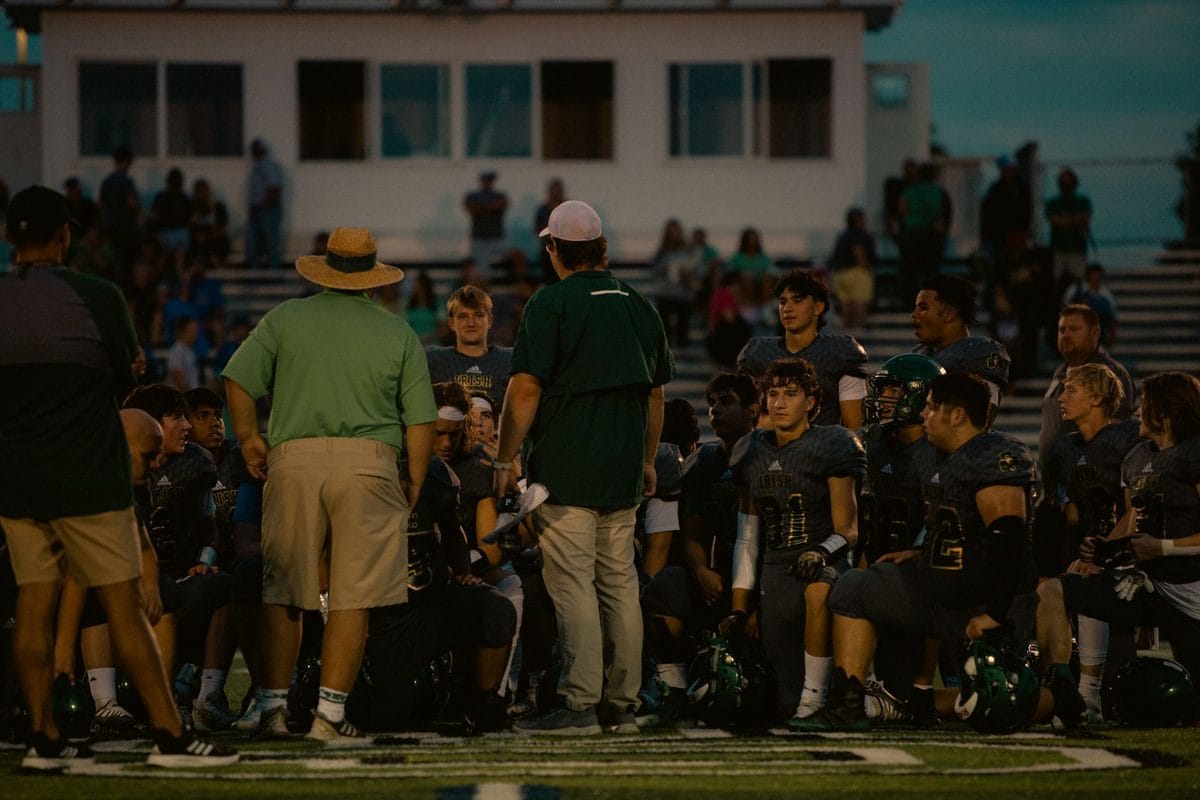
Fourth-and-2, two minutes left, Kansas City trailing by three. Andy Reid doesn't call a timeout to mull it over — his staff already ran the situation through a win-probability model before the offense broke the huddle. Punting here plays it safe and hands the outcome to a coin-flip defensive stand. But going for it keeps the game in Kansas City's own hands, and Reid has built a career on trusting exactly that kind of math. What the spreadsheet can't tell him is whether his right guard, playing through a groin strain since Week 9, can still hold up against a stunt on third-and-short. That's the tension running through every major professional sport right now: the numbers have gotten good enough to trust, but not good enough to replace the person standing on the sideline.
That tension shows up everywhere a coach has to make a call under pressure — an NFL sideline, an NBA bench during a fourth-quarter run, a boxing corner between rounds, a Premier League touchline in the 88th minute. Data providers now feed real-time numbers directly into tablets and earpieces, turning what used to be pure gut instinct into something closer to a live probability report. And yet the coaches who win consistently aren't the ones who follow the model blindly. They're the ones who know precisely when to override it.
The Models Now Sitting on the Sideline
Second Spectrum has tracked every NBA game since the 2017-18 season, logging player position twenty-five times a second and feeding coaches shot-quality data before the ball even clears the rim. Opta does something similar for soccer, mapping expected goals and pressing triggers that clubs like Manchester City build entire training sessions around. In the NFL, decision models popularized by analysts such as Ben Baldwin have made fourth-down aggression fashionable rather than reckless — Philadelphia built its identity over the past several seasons on going for it in spots where an older-school staff would have sent out the punt team. None of this is theoretical anymore; it sits on a tablet on the bench and gets checked as routinely as a lineup card.
- Second Spectrum's tracking cameras, installed in every NBA arena since 2017
- Opta's expected-goals and pressing metrics, now standard in most European soccer front offices
- Fourth-down decision models that turned "go for it" from reckless into routine — at least in the situations they were actually built for, among other tools now standard on pro sidelines
Where the Numbers Go Quiet
The model doesn't know your center rolled his ankle in warmups.
That's the blind spot every one of these systems shares — they're built on historical patterns, and historical patterns don't include the specific bruise, grudge, or hot streak sitting on your bench tonight. A win-probability chart says go for two after a touchdown late in a one-score game, and it's right on average across thousands of games. It has no idea your backup kicker just shanked two extra points in the cold, or that your best cornerback is playing through a hand injury he hasn't mentioned to the press. Erik Spoelstra runs one of the most analytics-literate benches in the NBA, yet he's talked openly about setting shot-quality models aside in the fourth quarter of tight playoff games because matchup fatigue and body language tell him something the numbers haven't caught up to yet. Gregg Popovich built much of the load-management era on data about back-to-backs and minutes played, then still benched or played stars based on what he saw in a shootaround the model never touched. This is the part of the job analytics hasn't solved, and it probably never fully will.
The NBA's Timeout Paradox
Timeouts create their own version of this problem. Advanced stats have shown for years that an opponent's free-throw percentage barely changes after a timeout — the widely cited "icing the shooter" effect is much smaller than fans assume, if it's real at all beyond a rounding error. Plenty of coaches call one anyway, partly for the small chance it works and partly because standing there doing nothing while a building of twenty thousand people watches feels unbearable. That's not analytics — it's psychology and crowd management, and it matters just as much as the tablet on the bench when the building is loud enough to rattle a rookie.
Boxing's Data Problem Is Different
Boxing and mixed martial arts complicate this even further, because the "data" a corner gets between rounds is nothing like a shot chart. CompuBox has logged televised fights since the 1980s, tracking punches thrown and landed round by round, and a good coach uses those numbers to argue for a specific adjustment — throw more jabs, cut the ring off, stop chasing power shots that aren't landing. But sixty seconds isn't enough time to process a printout, and the best corners boil everything down to one or two lines their fighter can actually use while gasping for air. Freddie Roach built his coaching reputation on noticing a fighter's hands drop a quarter-inch lower than normal and calling it before it became a knockout, not on reading CompuBox numbers between rounds. In a fifteen-second exchange, ten years of watching hands beats a punch-stat sheet every time.
What Guardiola and Sirianni Actually Do Differently
Pep Guardiola is known inside Manchester City for the printed dossiers his analytics staff hands him before matches — pages of pressing triggers, opponent build-up patterns, and expected-threat maps broken down by zone. But ask his players what actually changes his substitutions in the 60th minute and they'll talk about body language, not xG. He watches a wingback's first touch go heavy twice in a row and pulls him before any model would flag a drop-off. Nick Sirianni works from the other direction: Philadelphia's front office pushed fourth-down aggression as organizational policy, and Sirianni had to learn to trust it even when his gut wanted to punt from his own 45 with a two-score lead. Two coaches, two different starting points, arriving at the same place — the number sets the default, and the person on the sideline decides when tonight is the exception.
The Transfer Market Runs on the Same Split
Recruitment departments lean on the same tension. Data-driven soccer clubs like Brentford and Brighton built entire transfer strategies around underlying metrics — expected goals, progressive passes, pressures per ninety minutes — buying players other clubs' scouts had already written off on the eye test alone. Moneyball did the same thing for baseball two decades earlier, and NBA front offices now run comparable models on college prospects, weighing per-possession efficiency against measurements a stopwatch never catches. But every one of those clubs still sends a human scout to sit in the stands, because a spreadsheet can't see a midfielder sulk after losing a tackle or a point guard demand the ball in a huddle when his team is down by two with the shot clock running out. Brighton's recruitment staff has openly credited both sides of the process: the model narrows five hundred names down to twenty, and a scout's eye picks the three worth an actual bid. Skip the human step, and a club ends up buying a stat line instead of a person who still has to perform in front of a hostile crowd on a wet Tuesday night in February.
The Blend That Actually Wins
Here's the part worth committing to, not hedging on. Trust the model when the sample size is enormous and the situation is generic — fourth-and-short in the first half of a random October game is exactly the spot a decision engine was built for, and coaches who still punt there out of old habit are leaving win equity on the table. But don't trust it blindly in the final two minutes of a playoff game with a banged-up roster and a hostile road crowd; that's precisely where the historical average stops describing the specific night in front of you. If you've ever shouted at a television because a coach made the "obviously correct" analytical call in exactly the wrong moment, you already understand the split better than most front offices did a decade ago.
The best staffs in every sport have quietly reorganized themselves around this split over the past several years, hiring analytics directors who sit one seat away from the head coach instead of running reports in a back office that nobody reads until Monday. Whether that seat produces a smarter fourth-down call or a wasted timeout still comes down to the person making the final read in real time — the machine can build the menu, but somebody still has to order.