Formula 1 Aerodynamics in 2026: What the New Technical Regulations Change
F1's 2026 regulations reduce downforce 30 percent, introduce active wings, remove the MGU-H, and shift to 50/50 electric-combustion power. A technical breakdown of what has changed and who has adapted fastest.
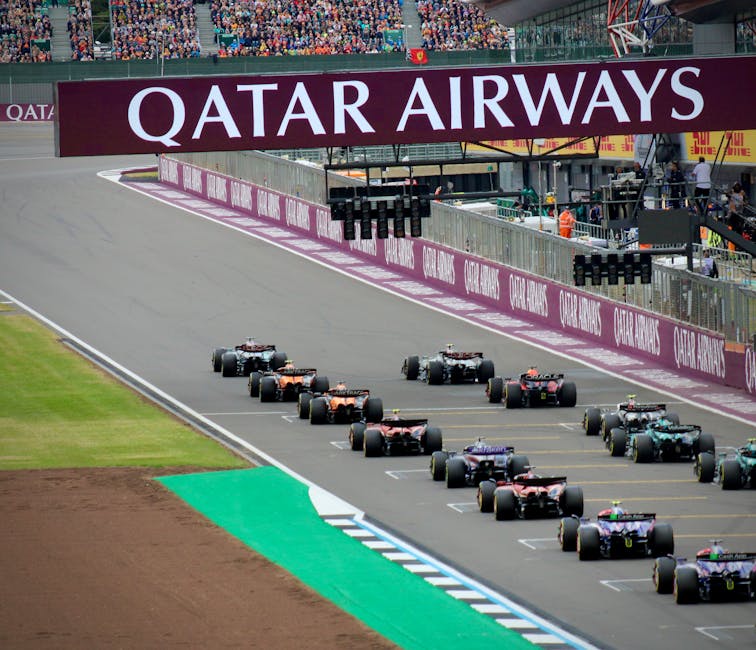
Formula 1 enters the 2026 season with its most significant technical-regulation overhaul in a decade, centered on reduced aerodynamic drag, active aerodynamic surfaces and a new 50/50 split between electrical and combustion power. The Bahrain season opener on March 13 provides the first competitive data on which teams have best interpreted the rules, and early testing suggests Mercedes and Aston Martin have opened a gap on reigning champions McLaren.
The FIA's new regulations, adopted in 2023 and refined through 2025, cut downforce by roughly 30 percent and drag by 55 percent, according to technical directives published by the governing body. The revisions were intended to ease the cornering speeds that had drifted toward the limits of driver tolerance and to improve overtaking by reducing dirty-air sensitivity.
Active Front and Rear Wings
The most visible change is the introduction of active aerodynamics on both front and rear wings. Drivers can deploy low-drag modes on straights — effectively replacing DRS, which has been eliminated — and high-downforce modes in corners. The transitions are managed by onboard sensors that detect corner entry and exit but remain subject to driver override.
"The cars feel like two different cars on the same lap," Mercedes driver George Russell told the BBC after pre-season testing in Bahrain. "The straight-line behavior is so much more efficient, and then you hit the braking zone and the wings bite." Russell's fastest lap in testing was 1:29.841, six tenths off the 2025 pole time despite the lower downforce regulations.
The 50/50 Power Unit Split
The combustion engines remain 1.6-liter V6 turbos but now contribute 400 kilowatts of peak power, matching the electrical contribution from the MGU-K. The previous 120 kW MGU-K and 550 kW combustion output have been rebalanced to produce the same total output — roughly 800 kW — with a higher electrical fraction and no MGU-H.
The removal of the MGU-H has hurt teams with the strongest prior expertise in heat-recovery systems, particularly Ferrari and Renault. Mercedes's power unit team, led by Hywel Thomas, has been credited with rapid adaptation. "The new unit is simpler than the old one in concept but harder in execution because you can't hide a bad combustion cycle behind heat recovery," Thomas told Autosport in February.
Fuel and Sustainable Power
F1 has transitioned entirely to 100 percent sustainable fuels, developed in partnership with Aramco. The fuels are second-generation synthetic hydrocarbons — chemically similar to gasoline but produced from non-fossil carbon inputs. Teams are permitted 70 kilograms of fuel per race, down from 110 kilograms under the previous regulations.
The reduced fuel allowance has complicated race-pace strategy. Teams must manage fuel and battery state of charge simultaneously, with electrical deployment now accounting for up to 40 percent of the total energy used across a lap at Monza or Spa. "You can run yourself out of battery before you run out of petrol," Alpine technical director David Sanchez said on a Sky Sports F1 technical feature last month.
Team-by-Team Expectations
Early speed traps and GPS analysis suggest Mercedes and Aston Martin lead on straight-line efficiency, with McLaren and Ferrari stronger in high-speed corners. Red Bull Racing, long dominant under former technical director Adrian Newey, has had the most difficult adaptation since Newey's move to Aston Martin in June 2024.
Lando Norris, the 2025 world champion, told the McLaren team magazine that the new regulations "rewarded cars that pivoted earliest" during the 2025 design lockdown. Norris spent three months working with McLaren's simulator team to adapt his driving style to the narrower corner-speed window imposed by the lower downforce.
Driver Market Implications
The technical reset has reshuffled driver market power. Fernando Alonso, 44, extended his Aston Martin contract through 2027 after the team's pre-season pace suggested he would have a front-running car for the first time since his 2005-06 world championships. Charles Leclerc remains at Ferrari through 2029 but publicly criticized the Scuderia's early testing pace, telling La Gazzetta dello Sport: "We are not where we need to be."
Max Verstappen's contract with Red Bull contains a 2026 performance clause that can be triggered if the team finishes lower than third in the constructors' championship, per multiple reports in Dutch publication De Telegraaf. The clause would make him a free agent for 2027. Verstappen declined to discuss the clause at Red Bull's season launch.
Schedule and Governance
The 2026 calendar features 24 races — tied for the most in F1 history — with Madrid joining the schedule from September 11-13 at the Ifema Madrid circuit. The FIA's cost cap has been raised to $145 million per team, reflecting the additional engineering investment required for the regulatory change.
The season concludes December 6 in Abu Dhabi. Only Norris, Verstappen and Leclerc have been given better than 5-to-1 odds to win the championship by major bookmakers, with Aston Martin's Alonso at 8-to-1 and Russell at 10-to-1.