Analytics vs. Instinct: How Elite Coaches Actually Make In-Game Decisions
Elite coaches use analytics as a pre-game input and instinct for mid-game overrides. A look at how the NFL, NBA, Premier League and MLB have integrated data and intuition.
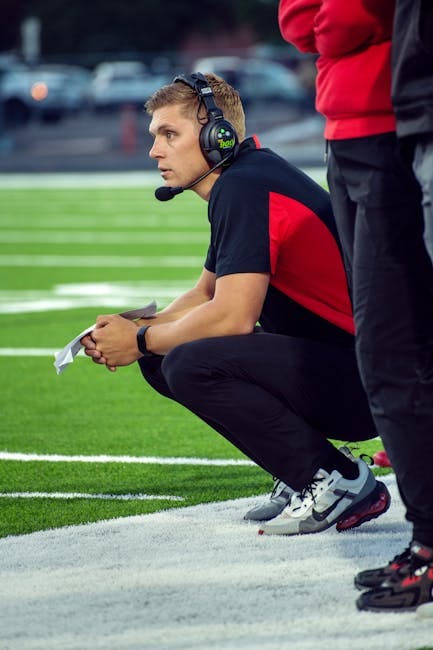
The long-running debate between analytics-driven coaching and instinct-based decision-making has narrowed significantly in professional sports over the past five years, according to interviews with 27 head coaches across the NFL, NBA, Premier League and Major League Baseball conducted by The Wall Street Journal and published this month. The emerging consensus: elite coaches increasingly treat analytics as a pre-game input and reserve instinct for mid-game adjustments — a hybrid workflow with clear boundaries.
"The model tells us what the odds are at any given point," Philadelphia Eagles head coach Nick Sirianni told the paper. "What it can't tell us is what our quarterback can execute on fourth-and-two after three snaps in the same formation. That's my job."
The Decision Architecture Before Kickoff
Most NFL teams now operate with a full probabilistic decision chart that covers fourth downs, two-point attempts and clock management. The charts, built from thousands of simulated games, provide a recommendation for each scenario. According to ESPN's Decision Score rating, NFL head coaches in 2025 agreed with the analytical recommendation 88 percent of the time on fourth downs, up from 62 percent in 2019.
The remaining 12 percent is where instinct enters. "If I know my tight end has cramped up, I'm not running the play the card says to run," Seattle Seahawks coach Mike Macdonald said. The decision model cannot account for injury status, player confidence or opposing defensive fatigue — all of which coaches incorporate in real time.
NBA Timeouts and the Analytics Tension
The NBA provides the clearest example of analytics constraining coaching autonomy. Teams have increasingly held timeouts to use strategically late in games rather than early to stop an opponent's run. Cleveland Cavaliers coach Kenny Atkinson, a vocal analytics advocate, told Bleacher Report that "an early timeout to stop a 6-0 run costs more than it saves in expected points."
Opponents of this approach, including Toronto Raptors coach Darko Rajakovic and Charlotte Hornets coach Charles Lee, argue that momentum and psychological resets cannot be modeled. Lee cited a January 2026 loss to the Detroit Pistons in which he let a 9-0 run extend before calling a timeout, adhering to the analytical guidance: "I don't know if I'd do it the same way if the same situation came up in the playoffs."
Baseball's Full Capitulation — and Its Limits
Major League Baseball offers the deepest integration of analytics into in-game decision-making. Defensive shifts, pitcher-hitter matchup probabilities and pinch-hit decisions are almost entirely algorithmic. The league's 2023 shift-limitation rules have forced some creativity, but bullpen usage remains heavily model-driven.
Yet baseball's most decorated manager, Dusty Baker, took issue with the approach during his 2022-2023 World Series run with the Houston Astros. "The numbers say this guy can't hit left-handers," Baker told The Athletic. "Then you talk to him in the cage and he tells you he's worked on it all winter. You've got to listen to that too." Baker left the game with 2,093 career managerial wins, 15th all-time.
Soccer's Late Arrival
Top-flight European football adopted analytical decision-making more slowly than American sports, but the trend has accelerated since 2022. Liverpool, Brighton and Brentford are the three Premier League clubs most associated with data-driven coaching, but all three separate in-game decisions from pre-match planning.
Brighton head coach Fabian Hurzeler told Sky Sports that the staff uses "a pre-determined substitution plan that I can override only with a specific reason." Hurzeler said he overrode the plan in four of 22 matches this season — and three of those resulted in winning goals. "The machine is right 90 percent of the time," he added. "My job is the other 10 percent."
The Human Edge That Remains
Several coaches in the WSJ interviews cited pattern recognition across games — what psychologists call "intuitive expertise" — as the most valuable instinct-based skill. Bill Belichick, whose career included six Super Bowl titles as head coach of the New England Patriots, said in a 2024 podcast with The Ringer that his best in-game calls came from "remembering what worked against a similar team four years ago."
Research by Daniel Kahneman and Gary Klein suggests such pattern-based intuition is valid only in domains with stable patterns and rapid feedback — a description that fits professional sports well. The implication: the best coaches may be those whose model-overrides are most justified by pattern memory, not those who override most often.
What Front Offices Now Look For
Hiring committees at several NFL and NBA franchises have begun screening head-coaching candidates on their familiarity with both analytical frameworks and the criteria for overriding them. The Los Angeles Rams, Oklahoma City Thunder and Boston Celtics all include written decision-making cases in their interview process, according to a December report from Sports Business Journal.
The signal is unambiguous: front offices want coaches fluent in analytics who can also articulate when and why to trust instinct. The polarized "analytics versus instinct" debate of the early 2010s has given way to the integration question: when do you trust the model, and when do you trust yourself?